
My plan for one day in Zagreb: an easy 16-stop walking route from morning landmarks in the Upper Town to Lower Town parks, evening pizza, and cocktails, plus where to stay, transport tips, and direct Google Maps pins.
Zagreb was the last stop of our road trip across Croatia, and after one day in Dubrovnik, one day in Split, and one day in Plitvice Lakes, it showed us a very different side of the country.
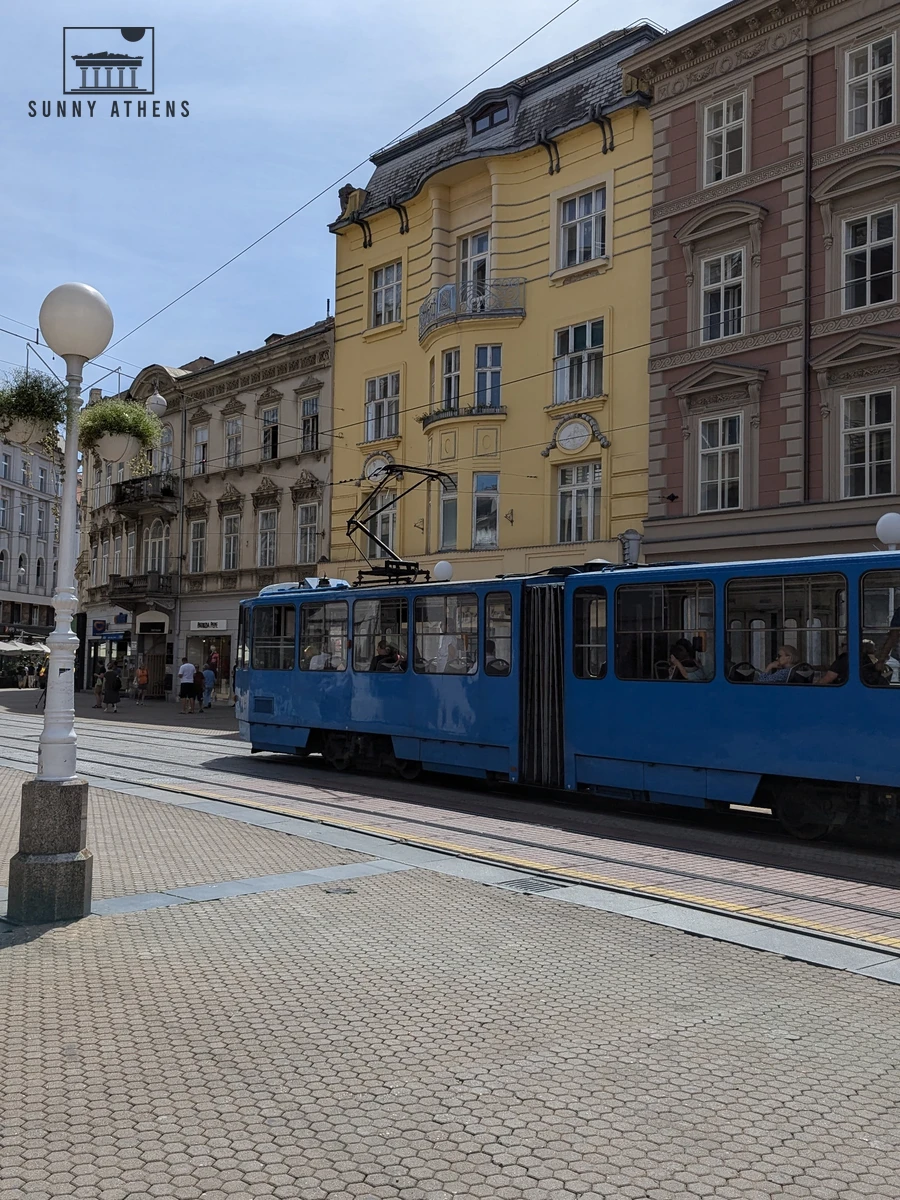
Here there is no sea or Roman palace, but rather a Central European capital with 19th-century Austro-Hungarian squares, blue trams, open-air markets, and long chains of parks.
To be honest, it did not impress us as much as the coast.
However, with a free walking tour in the morning, a good street food lunch, and excellent early May weather, Chrysavgi and I had a relaxed and pleasant day here.
Zagreb is also easy to enjoy, since the center is compact and you can see the main sights on foot in a single day.
Below is the exact walking route we followed, from a morning walking tour through Kaptol and the Upper Town to Croatian street food, the Lower Town parks, and evening dinner and drinks.
Is One Day in Zagreb Enough?
Yes, one day in Zagreb is plenty of time to see the best of the city.
The historic center is compact and easy to explore on foot, with most major landmarks being just a short walk apart.
In a single day, you can comfortably visit the main historic sights, experience the lively morning market, and finish with a relaxed dinner and drinks.
Whether you fly into the capital to start your Croatia road trip or end your journey here like we did, one full day fits naturally into your schedule without feeling rushed.
If you happen to have a second day to spare, Zagreb also makes a great base for day trips.
You can join this Plitvice Lakes and Rastoke guided day tour or this small-group tour for up to 8 people.
Alternatively, you can even make a quick trip across the border to nearby Ljubljana, which is only about two hours away (I will be publishing a dedicated guide for Ljubljana soon).
Where to Stay?
During our visit, Chrysavgi and I stayed at Hotel Jarun.
Located a little outside the center, in a quiet neighborhood, it was very clean and had private on-site parking, which was very convenient since we had our rental car with us.
After eating breakfast at the hotel in the morning, we simply took an Uber into the center so we would not have to deal with downtown traffic or look for parking garages.
If you only have one day in Zagreb and prefer to stay right in the city center within walking distance of all the sights, my recommendations are the following:
If you are traveling on a budget, Hostel Bureau is located just a short walk from Zagreb Cathedral and Ban Jelacic Square.
It offers both dorm beds and private rooms, along with a shared kitchen and a common lounge.
For a comfortable mid-priced stay, Fingerprint Luxury Apartments offers modern, fully equipped apartments just a short walk from Ban Jelacic Square and the Lower Town parks.
If you are looking for an upscale stay, Hotel Le Premier is set inside a restored 1920s palace a short walk from the center, featuring spacious rooms and an on-site spa.
How to Get to Zagreb?
Zagreb Franjo Tudman Airport (ZAG) is the busiest international airport in Croatia, located about 15 kilometers southeast of the city center.
If you want to reach your hotel from the airport using public transport, the simplest option is the Pleso Prijevoz airport shuttle bus.
It departs right outside the arrivals terminal every 30 minutes and takes about 35 to 40 minutes to reach the Zagreb Central Bus Station. From there you can connect to multiple city trams.
Alternatively, if you plan to explore the rest of Croatia with a car like we did, I recommend checking Discovercars.
It compares prices across all major rental companies and lets you book one-way drop-offs between cities.
Finally, if you prefer to skip public buses and don’t want to drive, you can always pre-book a private airport transfer straight to your hotel.
Welcome Pickups is the service I use in these cases, as an English-speaking driver waits for you inside the arrivals hall at a fixed price, even if your flight is delayed.
One Day in Zagreb Walking Itinerary
I put together this walking route for one day in Zagreb so that all the main sights connect in a loop without any back-and-forth walking.
After eating breakfast at our hotel, our morning started with a free walking tour that introduced us to the history of Kaptol and the Upper Town.
Even if you prefer not to join the group tour, following this route on your own makes organizing one day in Zagreb simple and straightforward.
The recommended route for your day in Zagreb
1. Zagreb Free Walking Tour
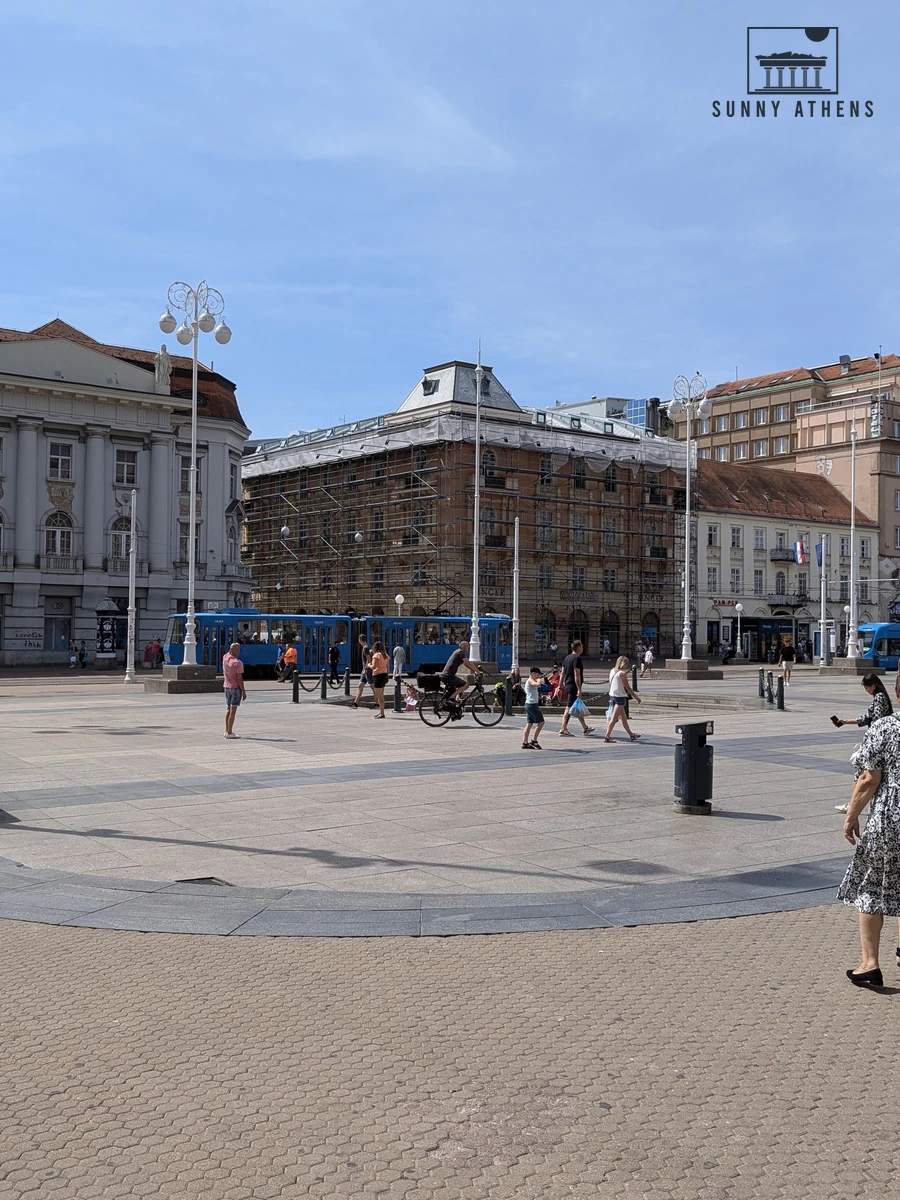
Why: Joining a walking tour is an excellent way to get a first introduction to the city together with a local, so we booked this Free Spirit Zagreb walking tour. If you haven’t done one before, booking online is completely free, and at the end you simply tip the guide whatever you feel the tour was worth. Our guide was great and kept things fun and relaxed during the two-hour walk, sharing local stories without overwhelming us with information.
2. Ban Josip Jelacic Statue
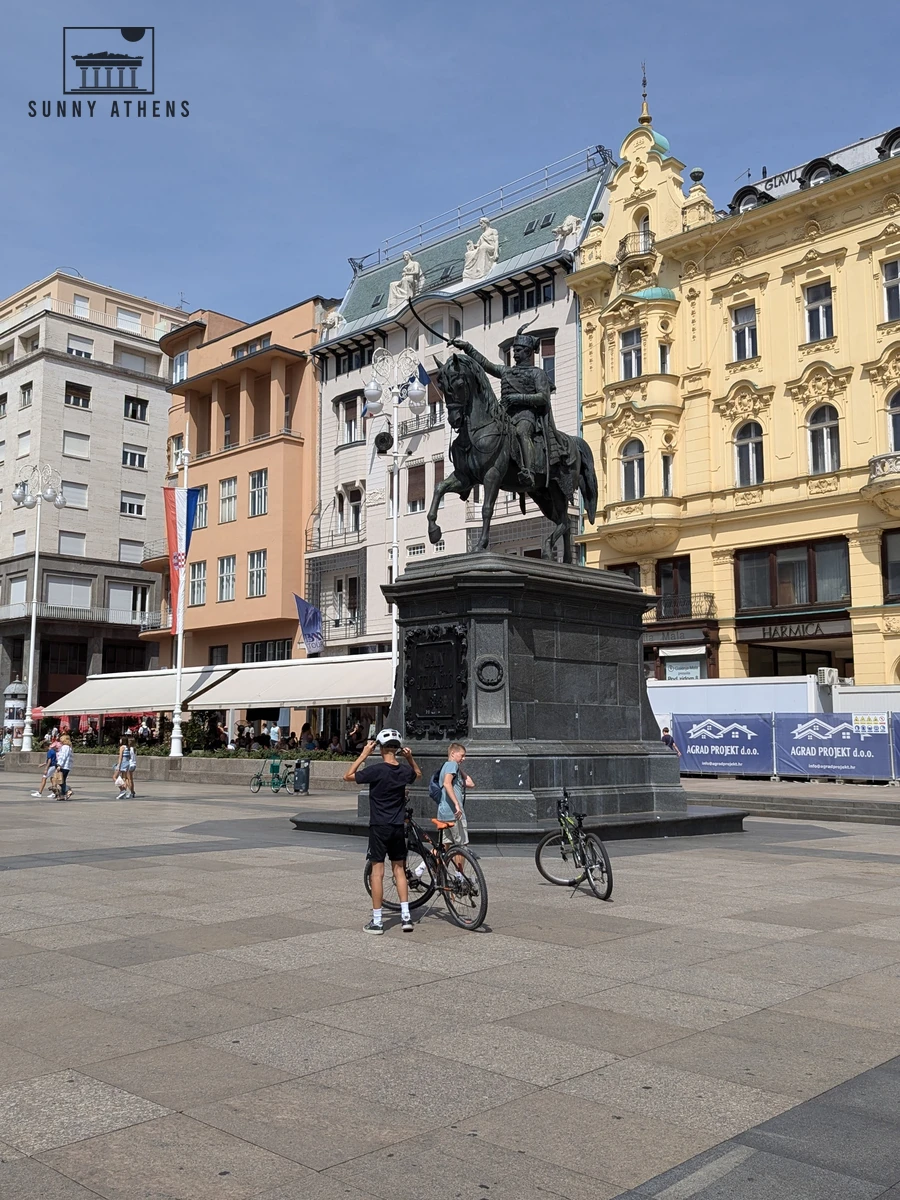
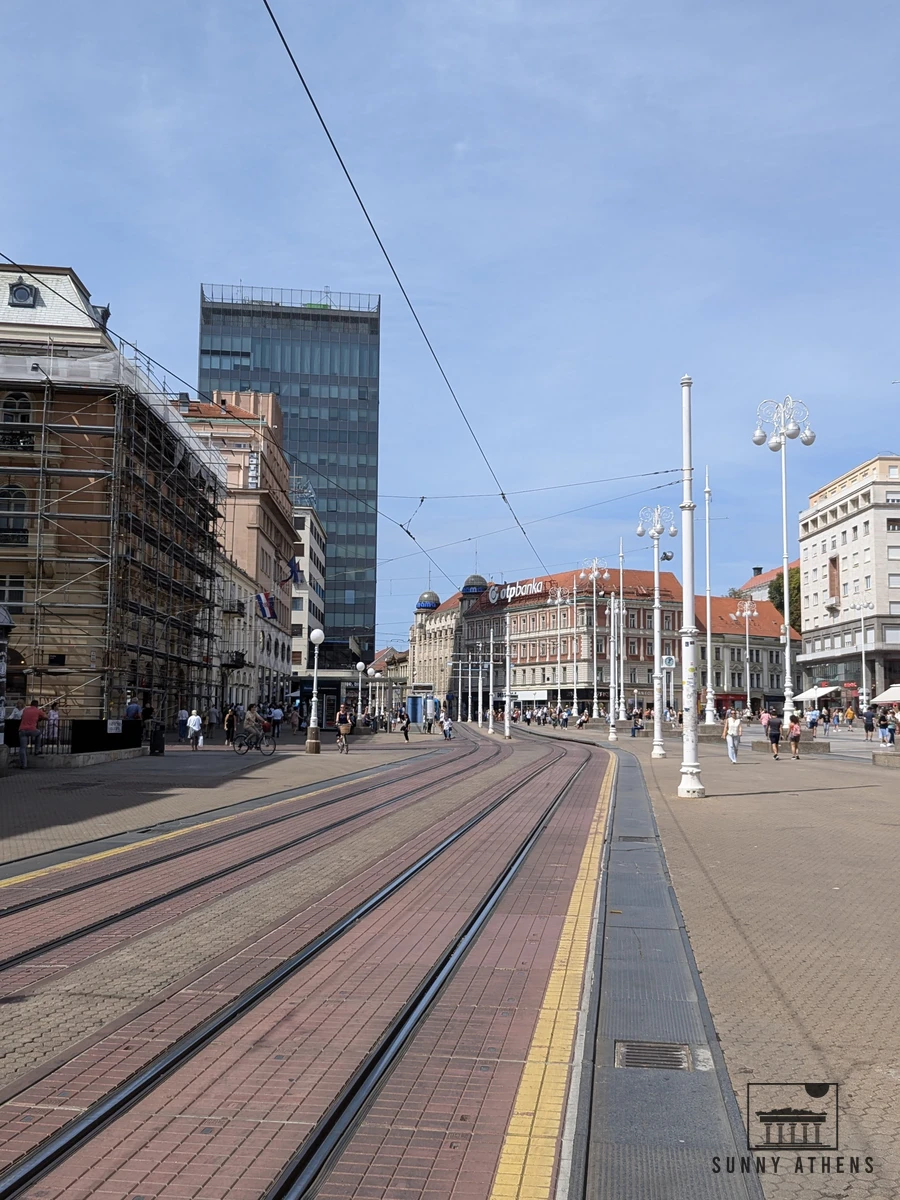
Why: Standing in Zagreb’s central square, the Ban Josip Jelacic Statue marks the main meeting point between the Upper and Lower Town. The large bronze statue of the Croatian governor was removed during the Yugoslav period in 1947 and kept in a basement before being put back in 1990. Surrounded by 19th-century buildings, outdoor cafes, and passing blue trams, this square is the main hub of city’s daily life.
3. Cathedral of Zagreb
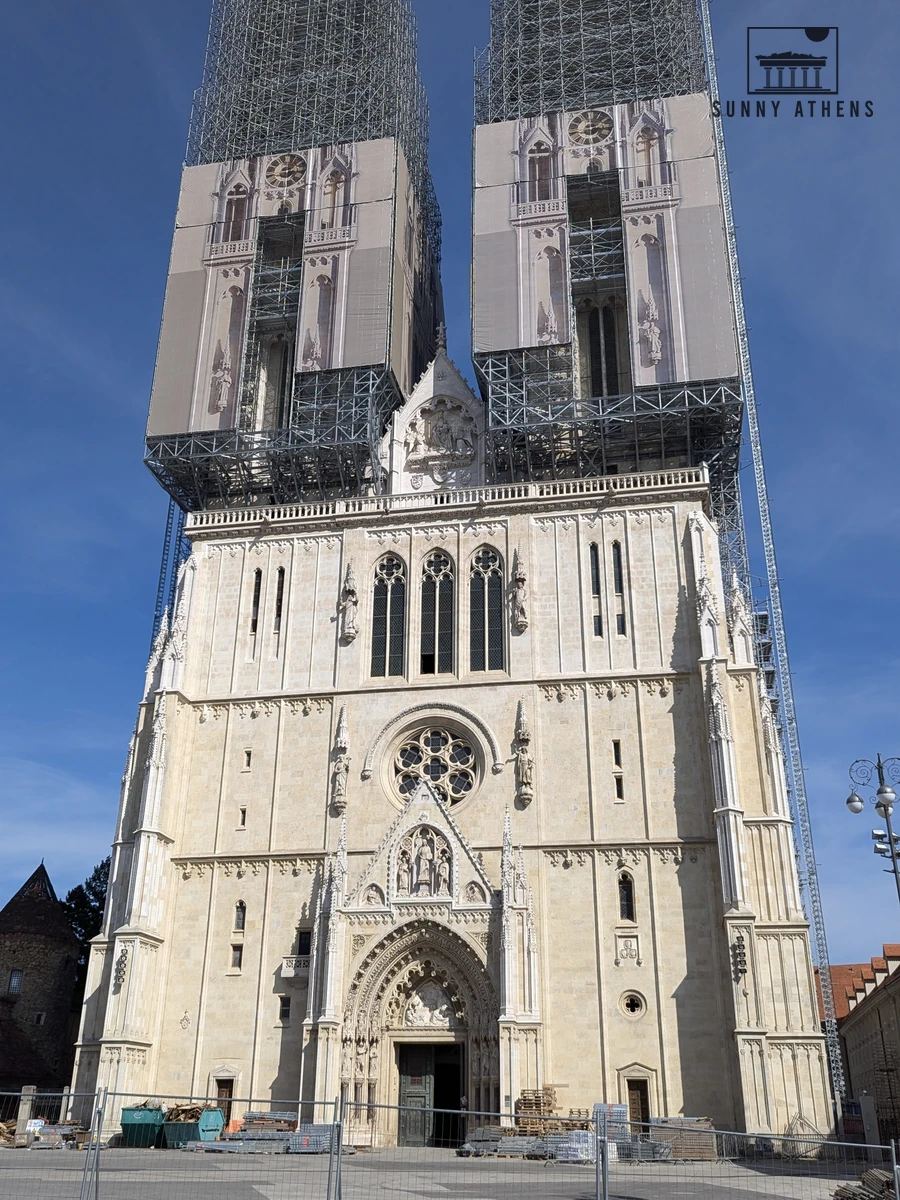
Why: From the square, a quick walk uphill brings you into Kaptol and the Cathedral of Zagreb, whose twin spires make it the tallest building in Croatia. The church was rebuilt in Neo-Gothic style after an 1880 earthquake damaged the older structure. Another earthquake in 2020 damaged the spires, and while you can now go inside again, repairs on the outside are still ongoing. Around the square, you can also see the round 16th-century stone walls built to protect the church during the Ottoman wars.
4. Dolac Market
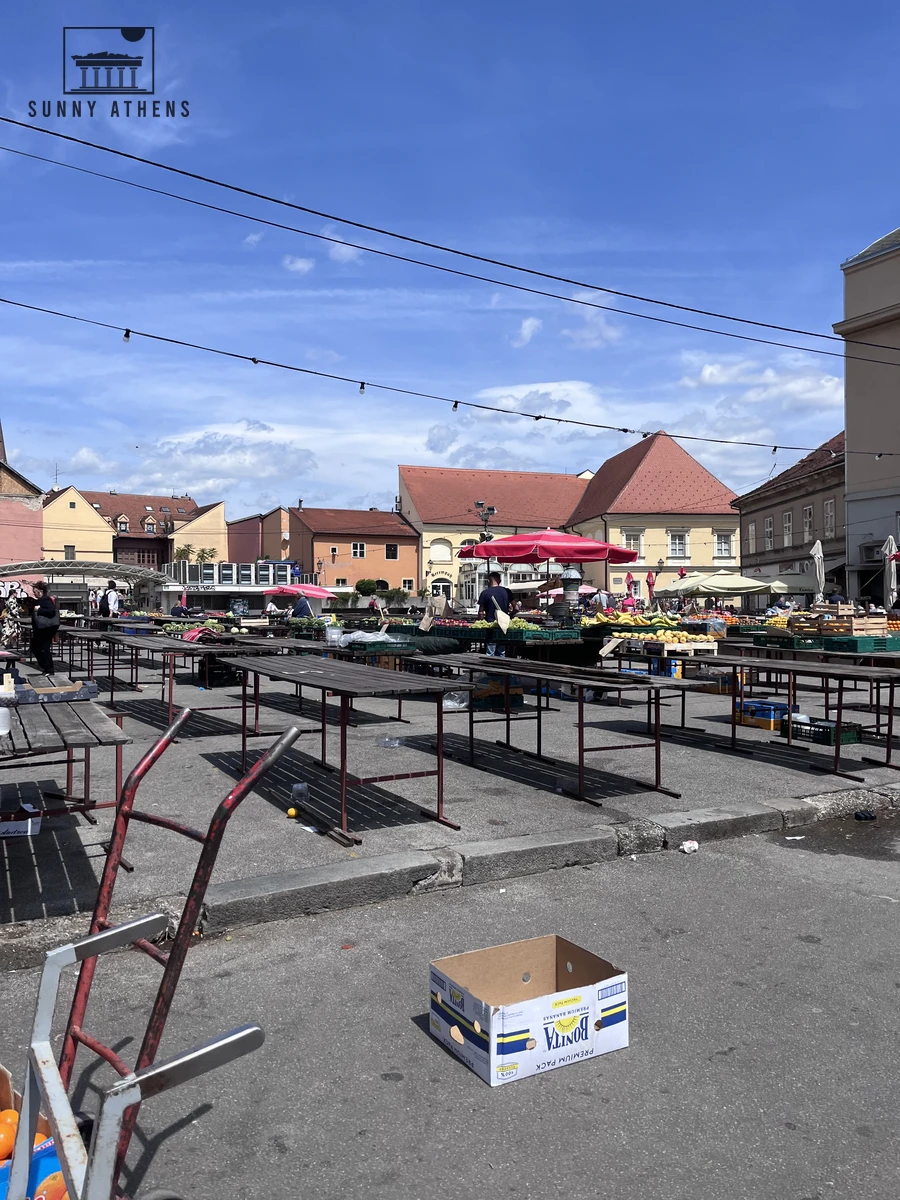
Why: Just above the main square, Dolac Market is an outdoor food market and a great place to start your morning walk. Farmers from around the region set up stalls here every day selling fruit, vegetables, local cheeses, and flowers, while an indoor market hall sits right below. We grabbed some snacks here and sat down for coffee nearby, which locals take very seriously, especially on Saturday mornings when they meet for coffee on outdoor terraces. Pedestrian Tkalciceva Street starts right behind the market and is lined with cafes and bars if you want to explore the area further.
Map Dolac Market and Tkalciceva Street
5. Stone Gate
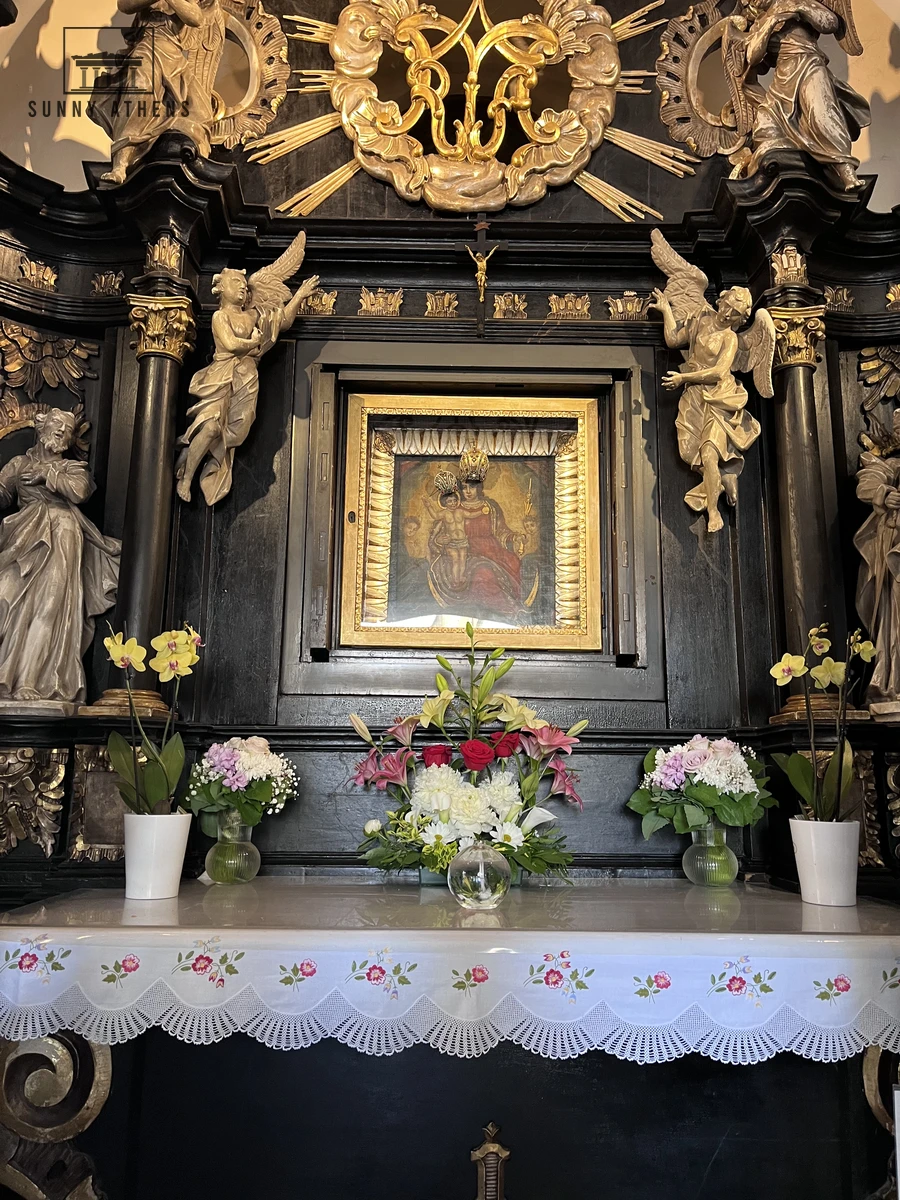
Why: As you walk up into the medieval Upper Town, you will pass through the Stone Gate, the only surviving gate of the old town walls. Built in the 13th century, it is famous for a 1731 fire that destroyed the surrounding wooden houses but left a painting of the Virgin Mary undamaged. Today, the passage houses a small chapel where locals still stop every day to light candles and say a quick prayer.
6. St. Mark’s Church
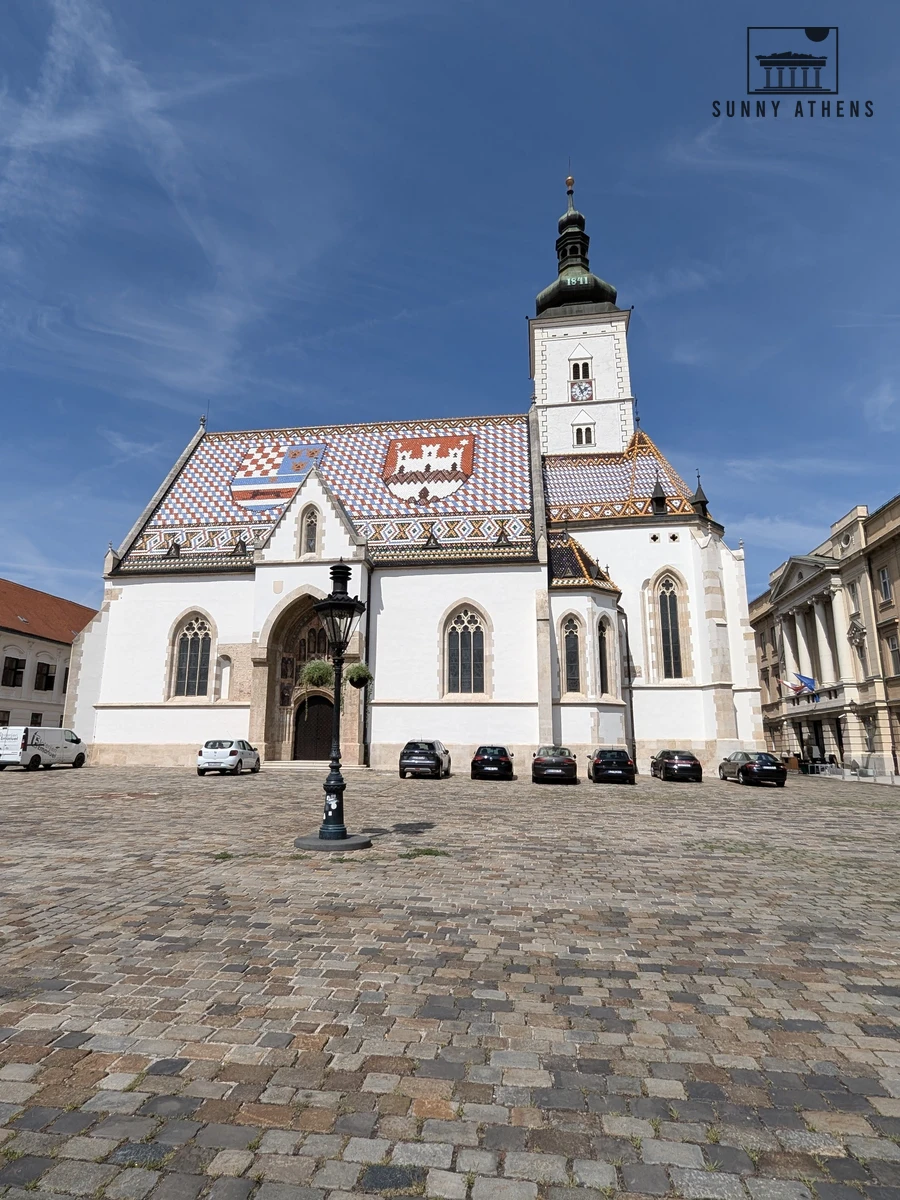
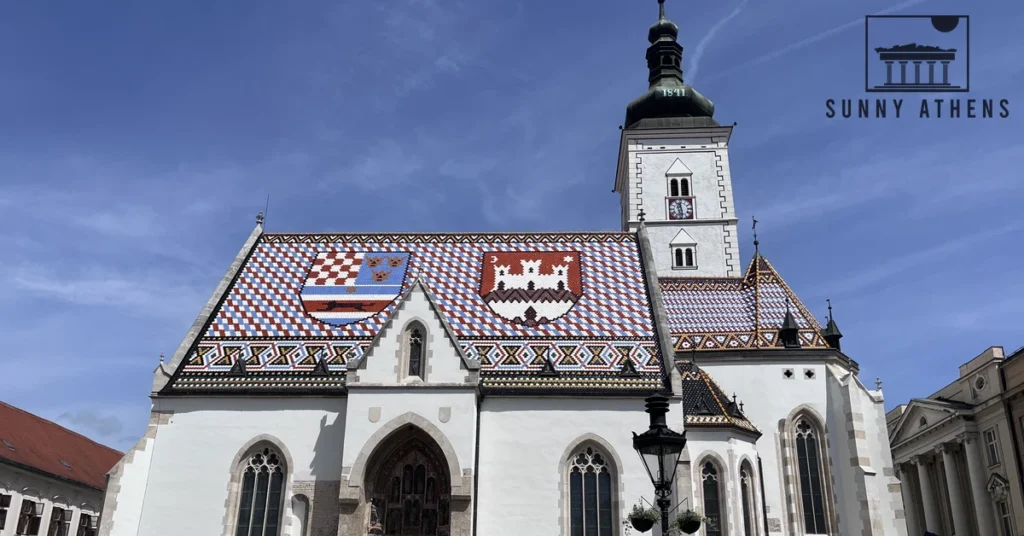
Why: A short walk further brings you to St. Mark’s Church, one of the most impressive sights in Zagreb. Its main highlight is the 1880 tiled roof, which displays the historic coats of arms of Croatia, Dalmatia, and Slavonia on one side and Zagreb on the other. Security fences keep people off the center of the square since the Croatian Parliament sits right here, but you can still get clear photos of the roof from the side.
7. Lotrscak Tower
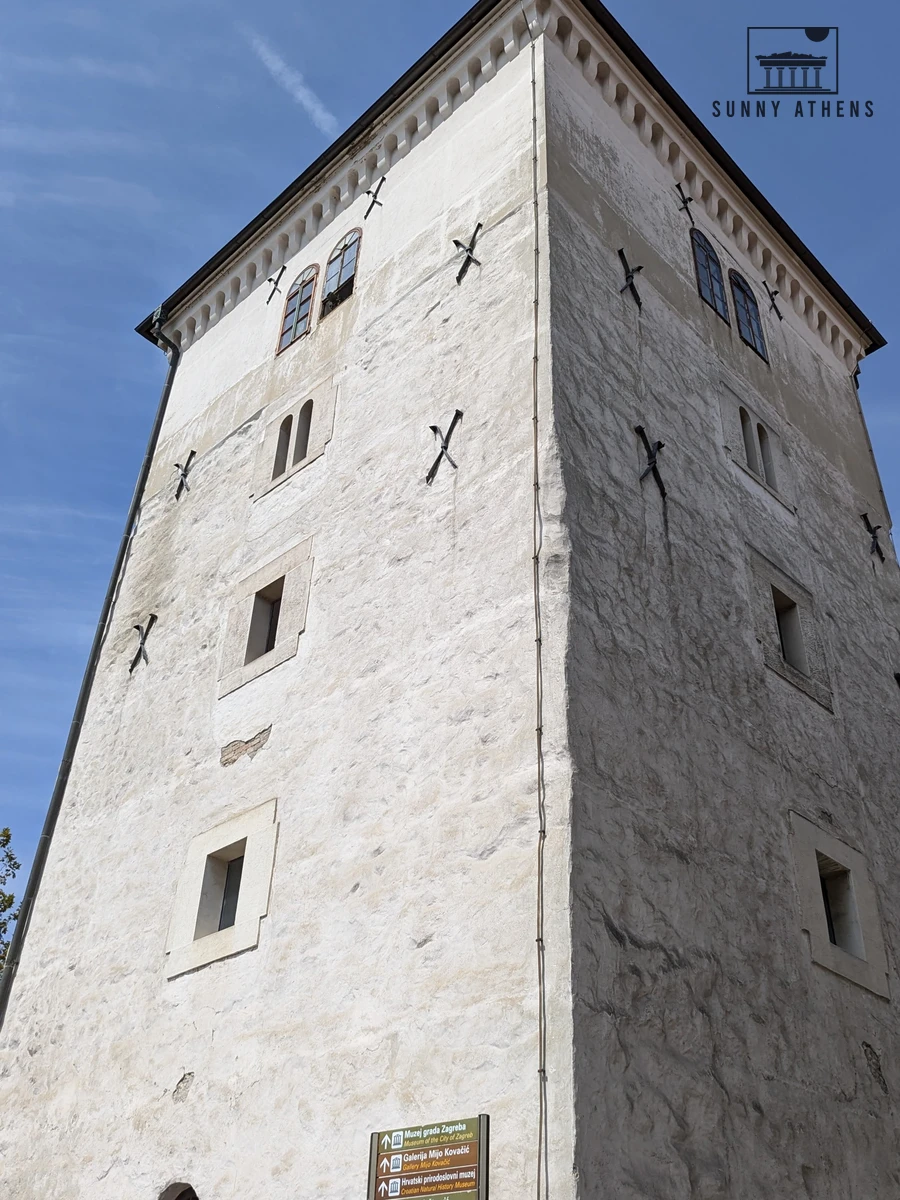
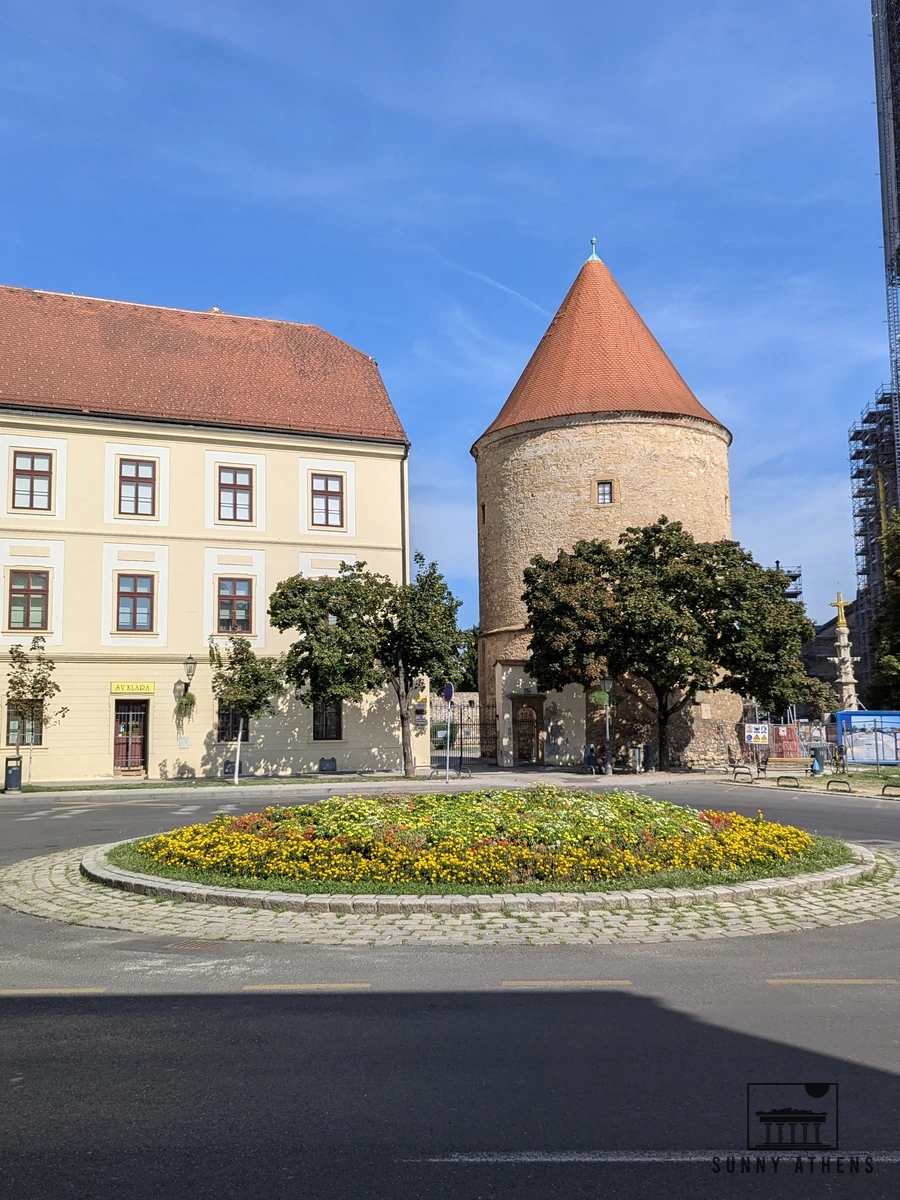
Why: Walking further past St. Catherine’s Church brings you to Lotrscak Tower, a 13th-century stone tower built to guard the old town. Try to time your walk to be here at 12:00 noon, when a cannon fires from the top window to mark the midday hour, just like it has done every day since 1877. We reached the tower with our tour just before 12:00, right in time to see the smoke blast out of the window. You will also see many guides recommend the nearby Museum of Broken Relationships, but it felt like a tourist trap, so I suggest skipping it.
8. Strossmayer Promenade
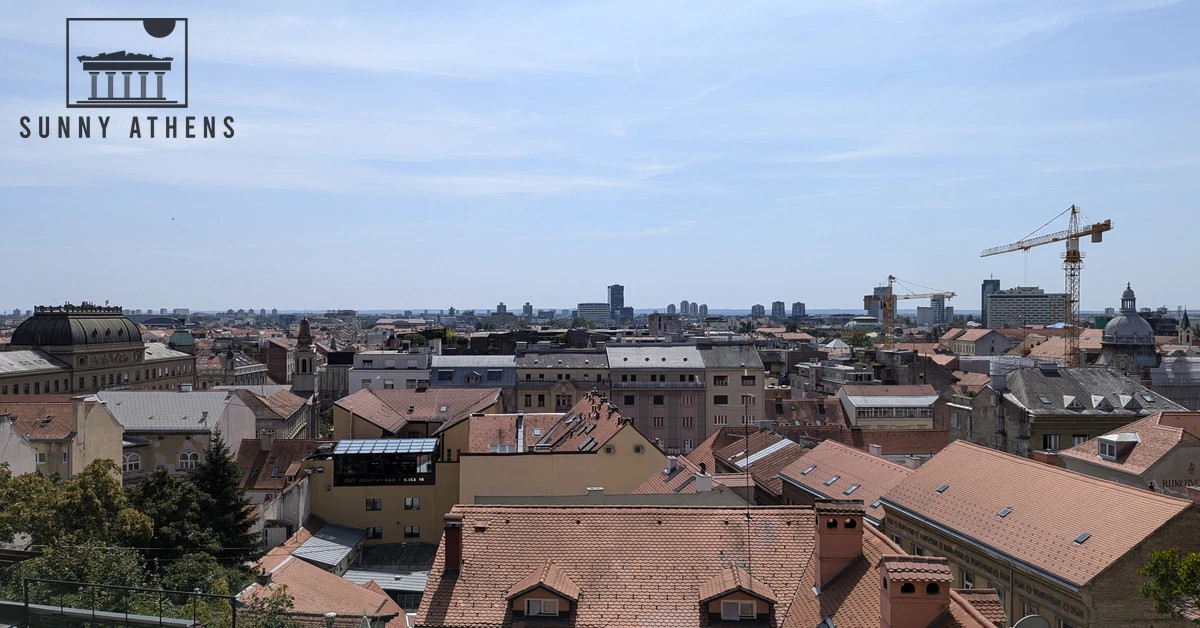
Why: Right below the tower, Strossmayer Promenade follows the line of the old medieval walls. Full of tall trees and lined with benches, it’s a great place to sit down and enjoy views over the red roofs of the Lower Town. As you walk along the path, you’ll also pass a bronze statue of Croatian writer Antun Gustav Matos sitting on a bench and looking out over the city.
Map Strossmayer Promenade and Antun Gustav Matos Statue
9. Zagreb Funicular
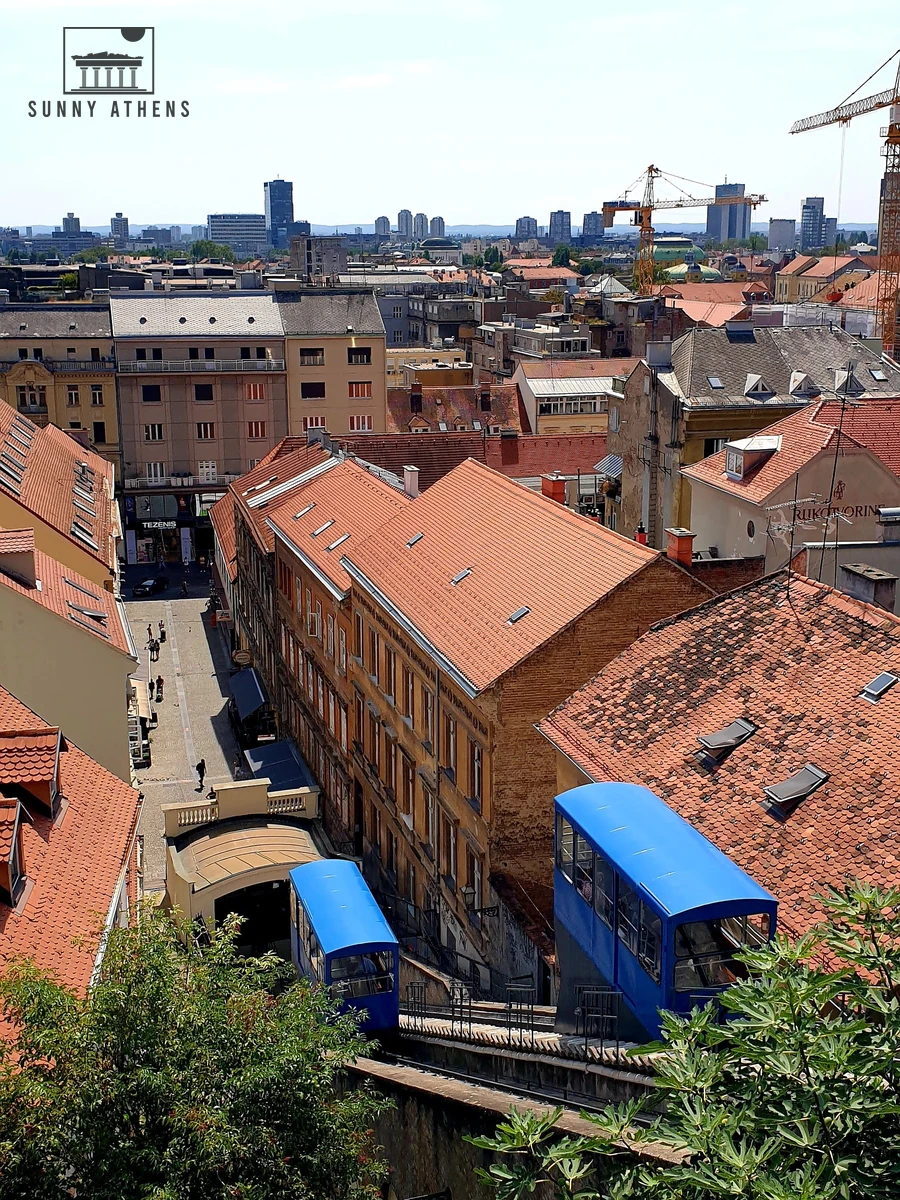
Why: Right next to the promenade you can find the upper station of the Zagreb Funicular, which links the Upper Town to Ilica Street below. Built in 1890, the track is only 66 meters long, making it one of the shortest public funiculars in the world. The ride takes just over a minute and costs 0,66 euros, though you can easily walk down the stairs right beside it. Another option is the Gric Tunnel, a World War II tunnel that runs under the hill and brings you out to the Lower Town for free.
Map Zagreb Funicular and Gric Tunnel
10. La Struk

Why: By now, you will probably be ready for lunch, and a 5-minute walk from the funicular brings you to La Struk. This bistro specializes almost exclusively in strukli, Zagreb’s signature dish of handmade dough layered with fresh cottage cheese and sour cream. They serve them hot in ceramic baking dishes, with flavors ranging from classic savory cheese and truffle to sweet blueberry.
11. Zrinjevac Park
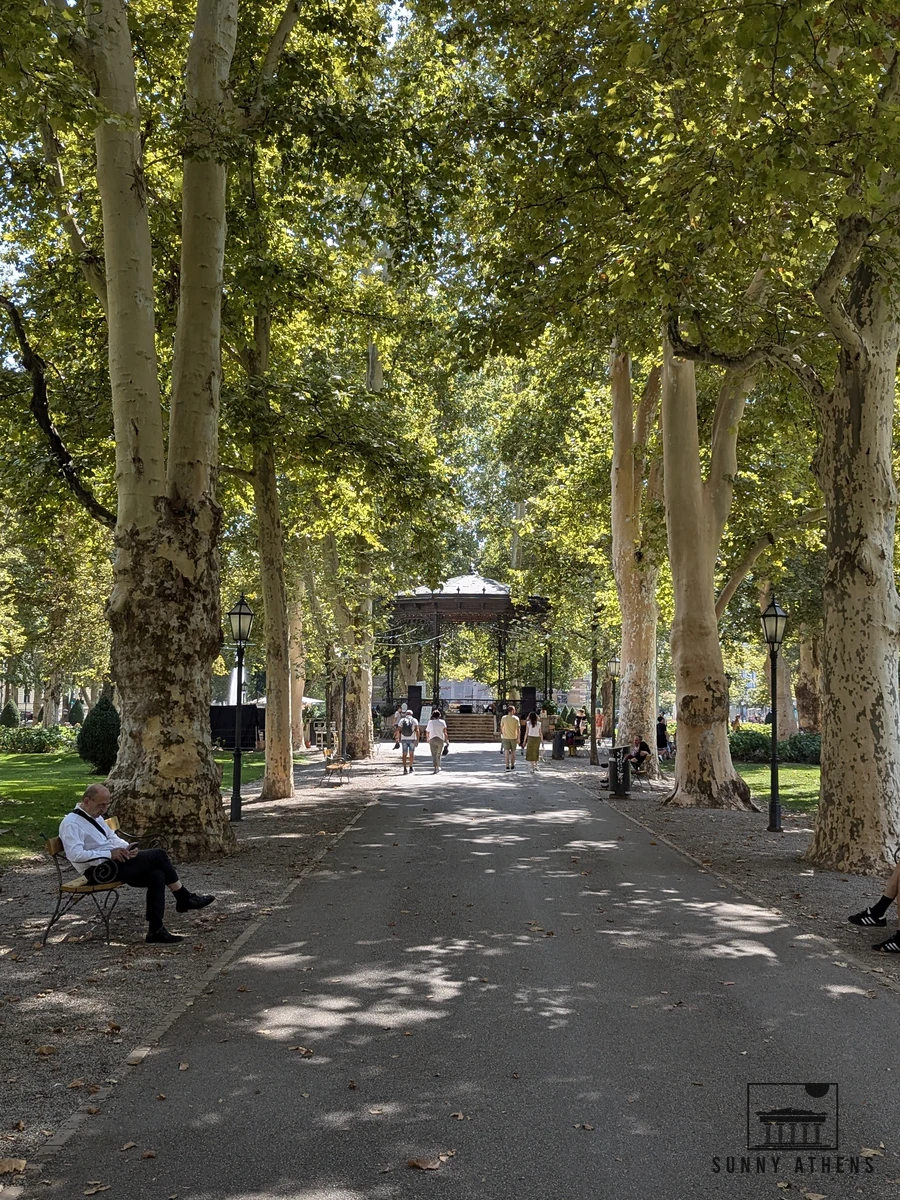
Why: After lunch, your walk continues into Zrinjevac Park, which was just a cattle market until the 1870s before becoming the first of the city’s green squares. Lined with tall trees and fountains, it has an 1891 music pavilion in the center that hosts open-air concerts in summer and Christmas market stalls in winter. Near the north entrance, you can also see an 1884 weather column that still shows daily temperature and air pressure readings.
12. King Tomislav Square
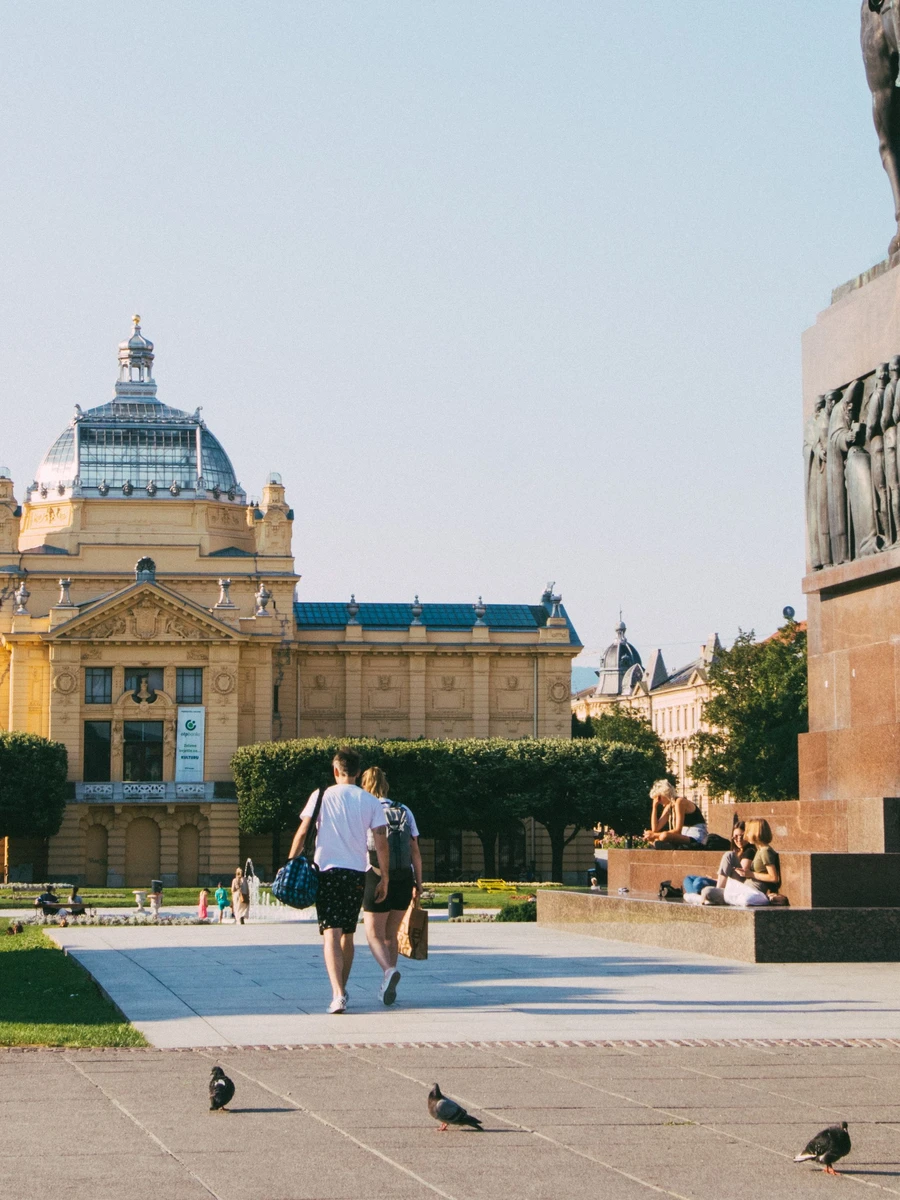
Why: Walking south brings you to King Tomislav Square, a large green space framed by the Art Pavilion and the main train station. The pavilion has a interesting backstory, as its iron frame was built in Budapest for the 1896 Millennium Exhibition, taken apart, and transported here by train. In the center stands a large statue on horseback of Croatia’s first king, while in winter the entire square turns into an open-air ice skating park.
13. Botanical Garden
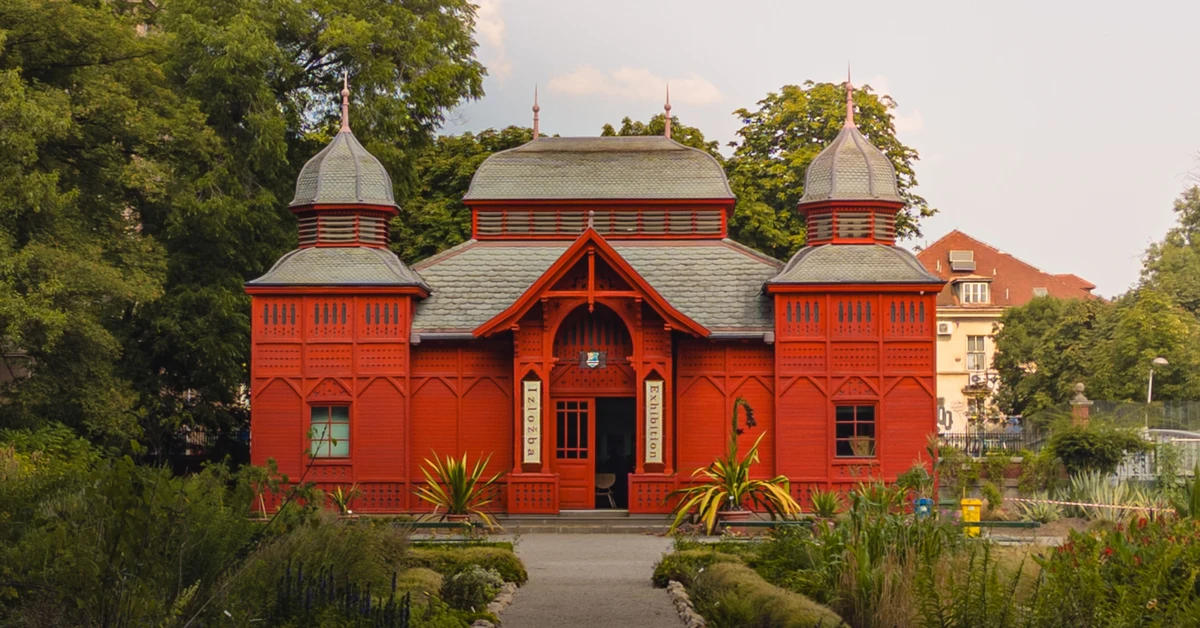
Why: A two-minute walk from the square brings you to the Botanical Garden, founded in 1889 by the University of Zagreb with over 10.000 plant species. It is known for protecting rare native plants, including the yellow Velebit flower, a famous Croatian symbol once featured on its coins. Entry is free and the garden is open from April to October, though keep in mind it closes early at 14:30 on Mondays.
14. Croatian National Theatre
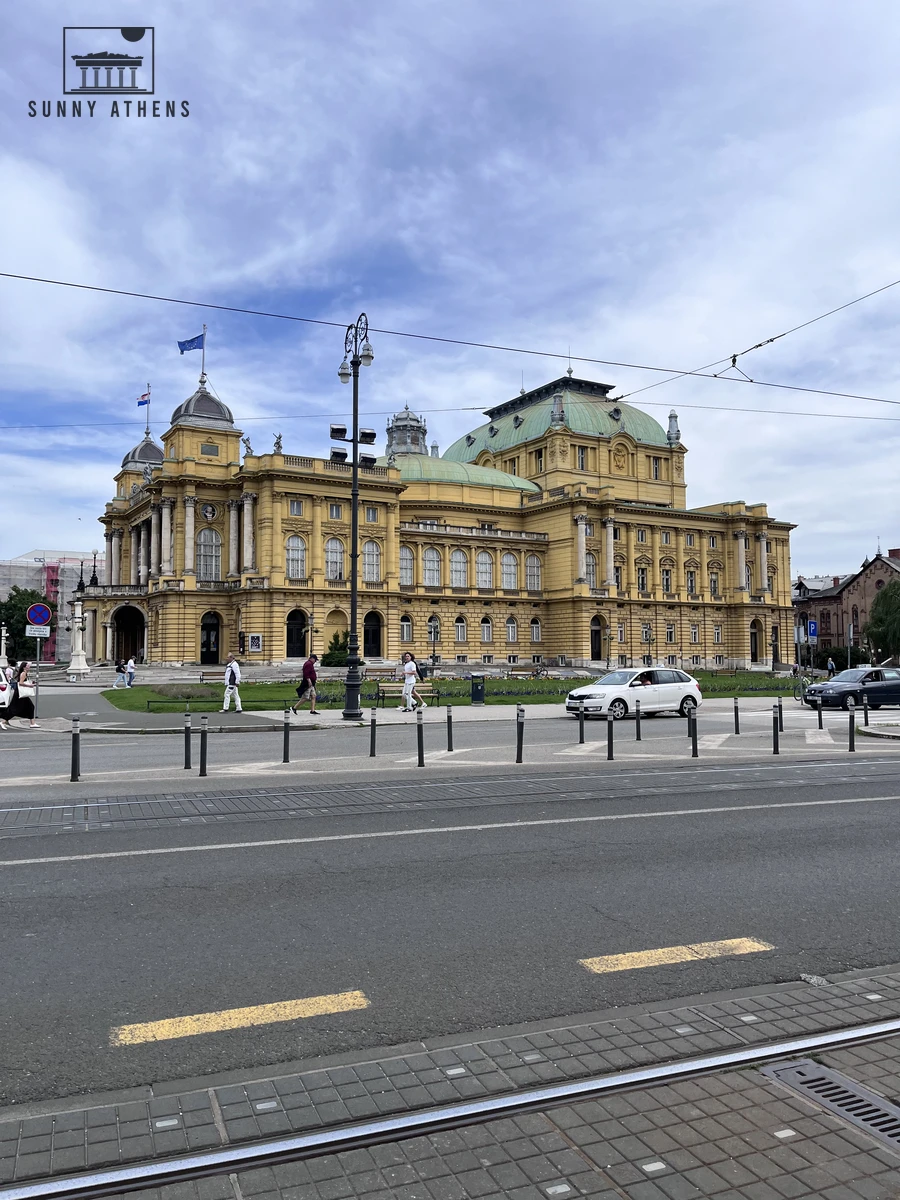
Why: Your route through the parks brings you to the Croatian National Theatre, set right in the middle of one of the city’s biggest squares. It was built in 1895 and it’s the city’s main stage for opera, ballet, and theater. Right outside the main entrance, you will find the Well of Life, a famous bronze sculpture made in 1905 by Croatian sculptor Ivan Mestrovic.
15. Basta Gourmet Bar

Why: A 5-minute walk back into the pedestrian streets brings you to Basta on Varsavska Street for dinner. If you didn’t have time to go out the evening before after visiting Plitvice Lakes, or if you are starting your trip in Zagreb today, this is a nice spot to sit down. It has a relaxed courtyard terrace and bakes delicious Neapolitan pizzas in a wood-fired oven. If you’d rather have traditional Croatian food, Gostionica Ficlek near the main square is another great option for local dishes.
Map Basta and Gostionica Ficlek
16. Roots Juice and Cocktail Bar
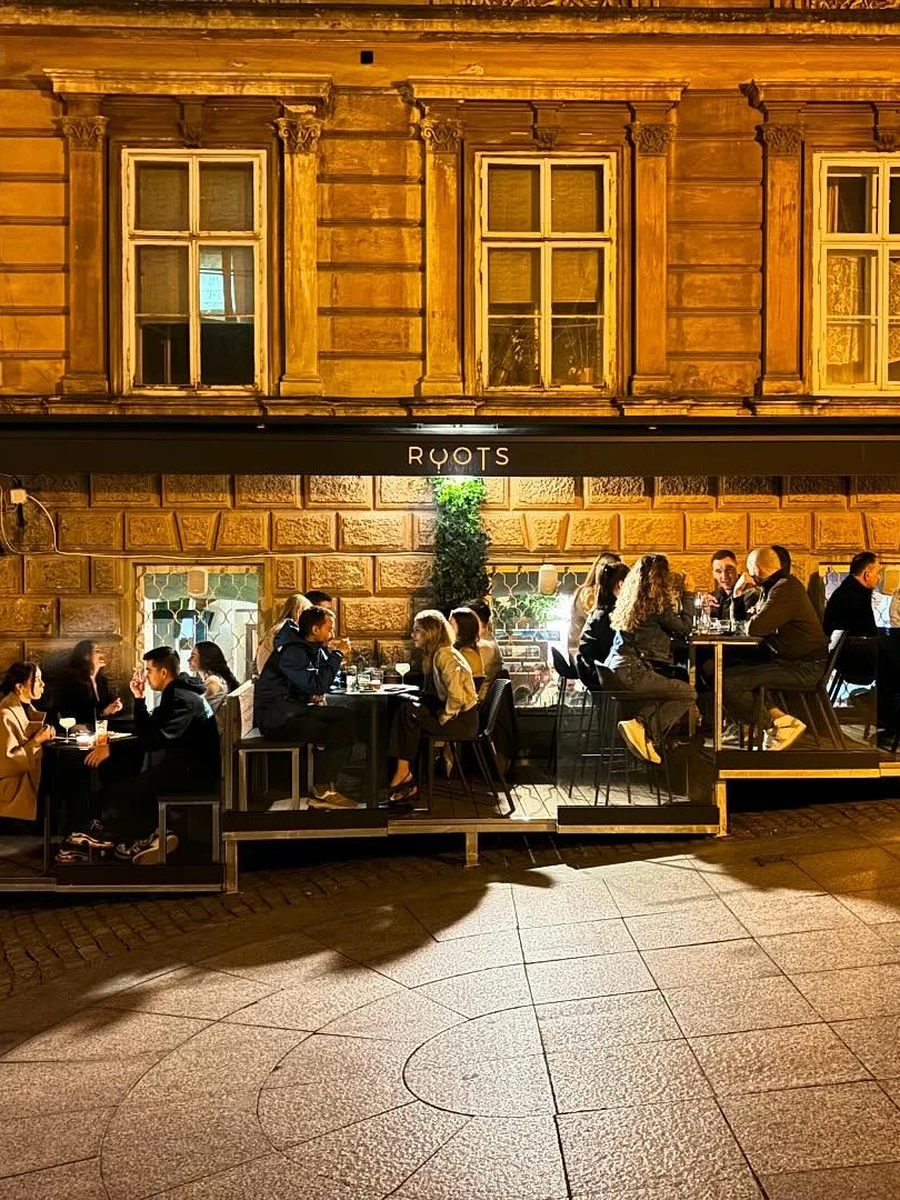
Why: If you still have energy after dinner, the final stop of your day is Roots, right by the lower station of the funicular. I recommend trying their smoky mezcal Negroni or one of their signature cocktails crafted with house-made syrups. We also really liked the friendly atmosphere and the outdoor tables on the pedestrian street, which make it a great spot to finish your day.
Practical Tips & FAQs
Is Zagreb worth visiting?
Yes, spending one day in Zagreb is definitely worth it, especially at the start or end of a trip across Croatia: it shows you a completely different, Central European side of the country compared to the Adriatic coast.
Instead of beaches and picturesque harbors, you get Austro-Hungarian architecture without the heavy summer crowds of the coastal towns.
It may not have the wow factor of Dubrovnik, Split, or Plitvice Lakes, but its compact center make it an easy and pleasant place to start or finish your trip.
What is the best time of year to visit Zagreb?
The best months to spend one day in Zagreb are May to June and September to October, when temperatures are comfortable for walking between the Upper and Lower Town.
Chrysavgi and I visited in early May at the end of our road trip, and the weather was excellent.
December is also a popular time to visit, as the capital hosts its Advent in Zagreb Christmas markets across Zrinjevac Park and the central squares.
How do you get around Zagreb?
During one day in Zagreb, you can easily reach all the sights in both the Upper Town and Lower Town on foot.
If you are staying outside the center with a car like we did at Hotel Jarun, taking an Uber or using Zagreb’s blue ZET trams is inexpensive and saves you from looking for downtown parking.
What is the best way to time your day in Zagreb?
To make the most of one day in Zagreb, passing through Dolac Market before lunch makes sense, as the open-air stalls are busiest in the morning and pack up in the early afternoon.
If you want to hear the Gric cannon, plan to be near Lotrscak Tower a few minutes before 12:00, which fits easily with a morning free walking tour like ours.
What currency is used in Zagreb?
Croatia uses the Euro (€), and contactless cards are accepted almost everywhere, from cafes and restaurants to Uber rides.
Still, it is useful to carry a few euros in cash if you want to buy fresh fruit at Dolac Market or ride the funicular.
Final Thoughts
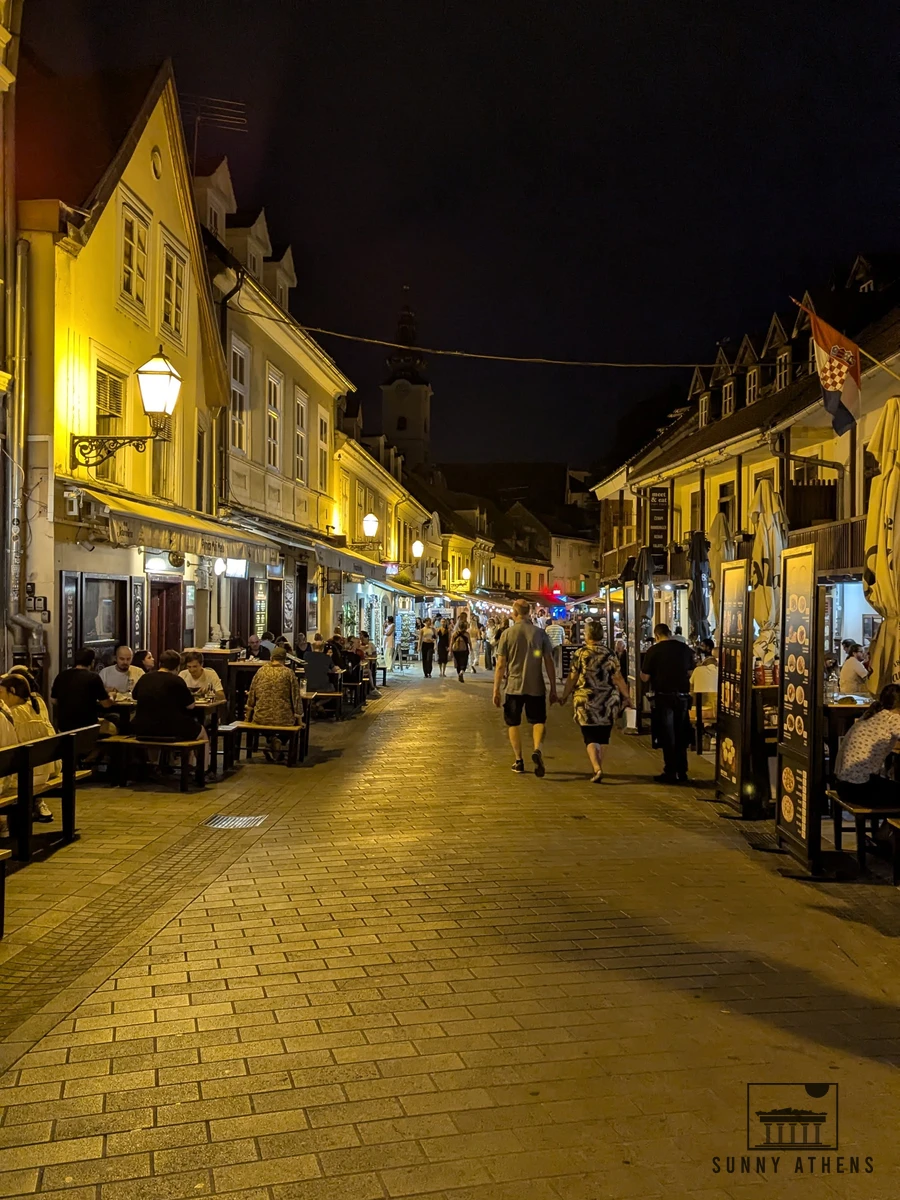
Finishing our road trip with one day in Zagreb gave us a relaxed and enjoyable look at Croatia’s capital before flying back to Athens.
Starting with a local free walking tour, seeing the colorful tiled roof of St. Mark’s Church, hearing the midday cannon at Lotrscak Tower, and enjoying baked strukli at La Struk before walking through the Lower Town parks made for an easy day in the capital.
Zagreb was the last piece of our road trip, and the other three stops each have their own guide: one day in Dubrovnik for the city walls, one day in Split for Diocletian’s Palace, and one day in Plitvice Lakes for the lakes and waterfalls.
Outside Croatia, you can check out my walking itineraries for 3 days in Vienna, Wroclaw in one day, and my home city Athens in 1 day.
Plan Your Trip
Stay: Stay: Booking.com (24/7 support, easy booking)
Airport: Welcome Pickups (pre-booked, reliable airport transfers)
Drive: Discovercars (compare prices, free cancellation)
Connect: Airalo eSIM (cheap data)
Do: GetYourGuide (unique tours & activities)
Fly: Skyscanner (find the cheapest flights)
Explore: GuruWalk (free walking tours worldwide)
Protect: SafetyWing (affordable travel insurance)
Sunny Athens is reader-supported. Some links on this page may be affiliate links, meaning we may earn a small commission at no extra cost to you, if you make a purchase. This helps support our work and keeps our travel tips honest and independent. Learn more in Advertise Disclosure.


