
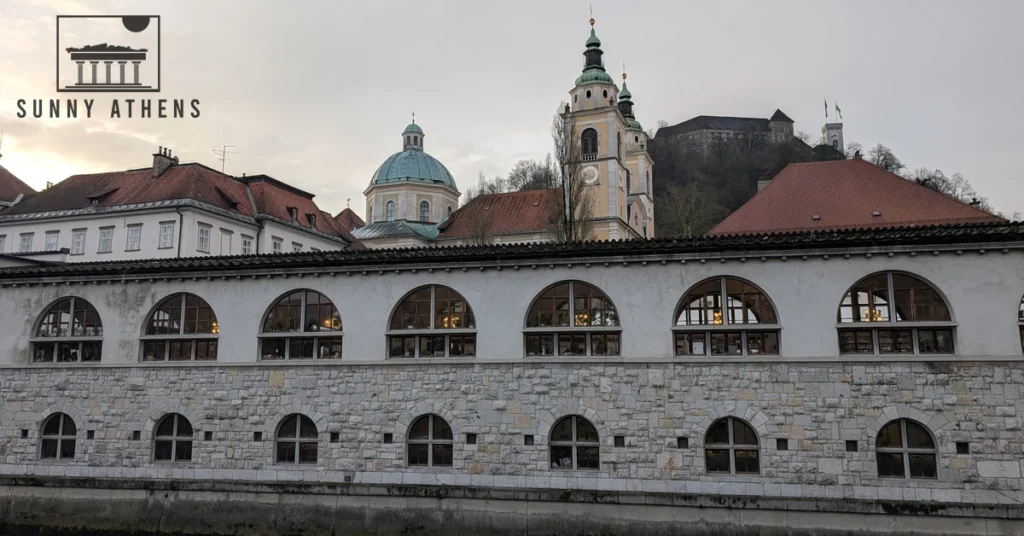
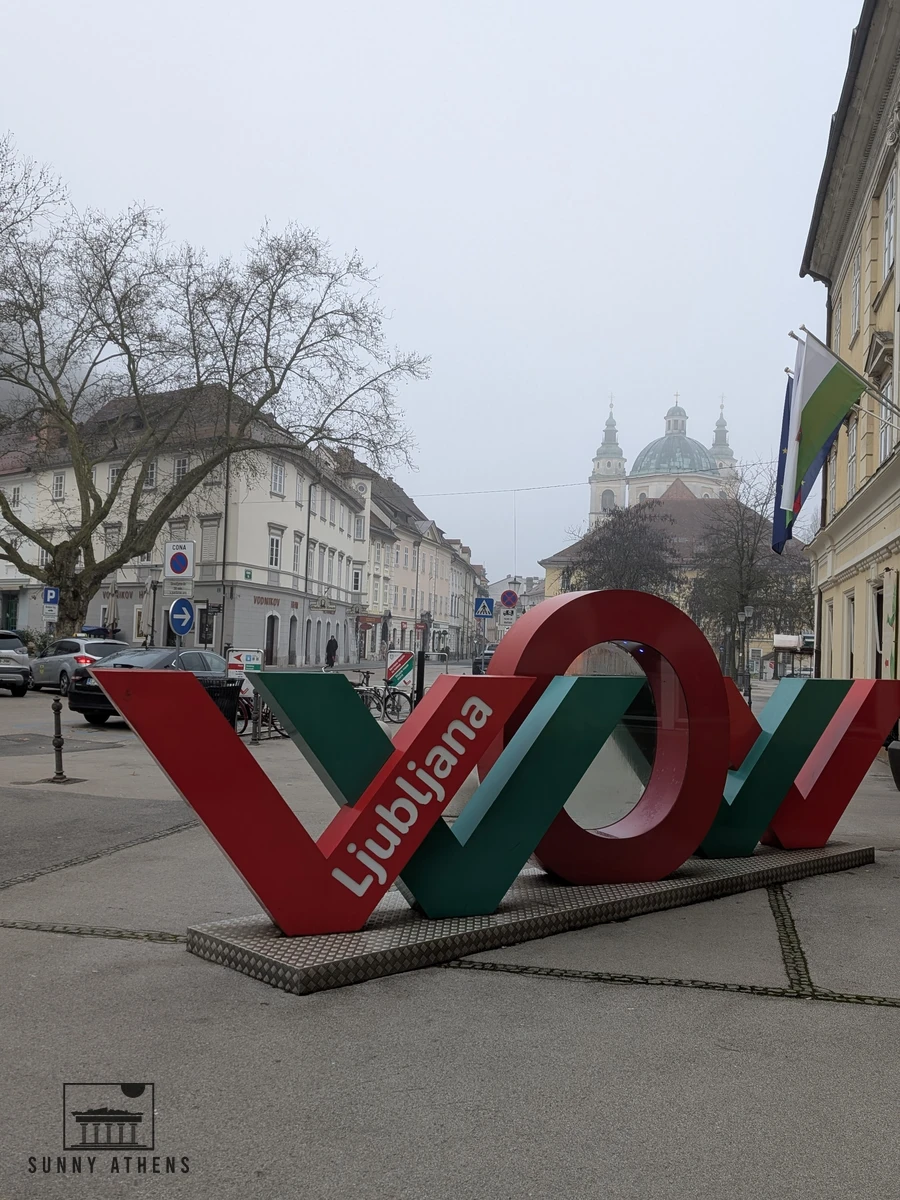
My plan for one day in Ljubljana: an easy 21-stop walking route covering the Old Town, the riverside bridges, Ljubljana Castle, traditional Slovenian food, where to stay, and direct Google Maps pins.
Ljubljana is one of the smallest capitals in Europe.
Yet, it is a really beautiful city that is very easy to walk around.
Because the entire historic center is pedestrianized and wraps around the Ljubljanica River, it is ideal for spending one day in Ljubljana on foot.
Along the way, you also get to eat great food, from warm savory dumplings and local cheeses to riverside pastries and late-night street food.
Chrysavgi and I visited in mid-February, flying into neighboring Zagreb, picking up a rental car, and driving across the border to use the capital as our base.
After exploring the city itself, Ljubljana works as an ideal base for two fantastic day trips: a Lake Bled and Lake Bohinj day trip in the Julian Alps, and a visit to Postojna Cave and Predjama Castle (I will be publishing detailed guides for both of these day trips soon).
If you prefer not to drive, you can easily book this Lake Bled and Lake Bohinj day tour and this Postojna Cave and Predjama Castle guided tour directly from the city.
Below is the exact walking route for one day in Ljubljana, starting with morning coffee and a local walking tour before heading up to the castle, sitting down for a traditional Slovenian meal, and walking through the squares and Tivoli Park.
How Much Time Do I Need in Ljubljana?
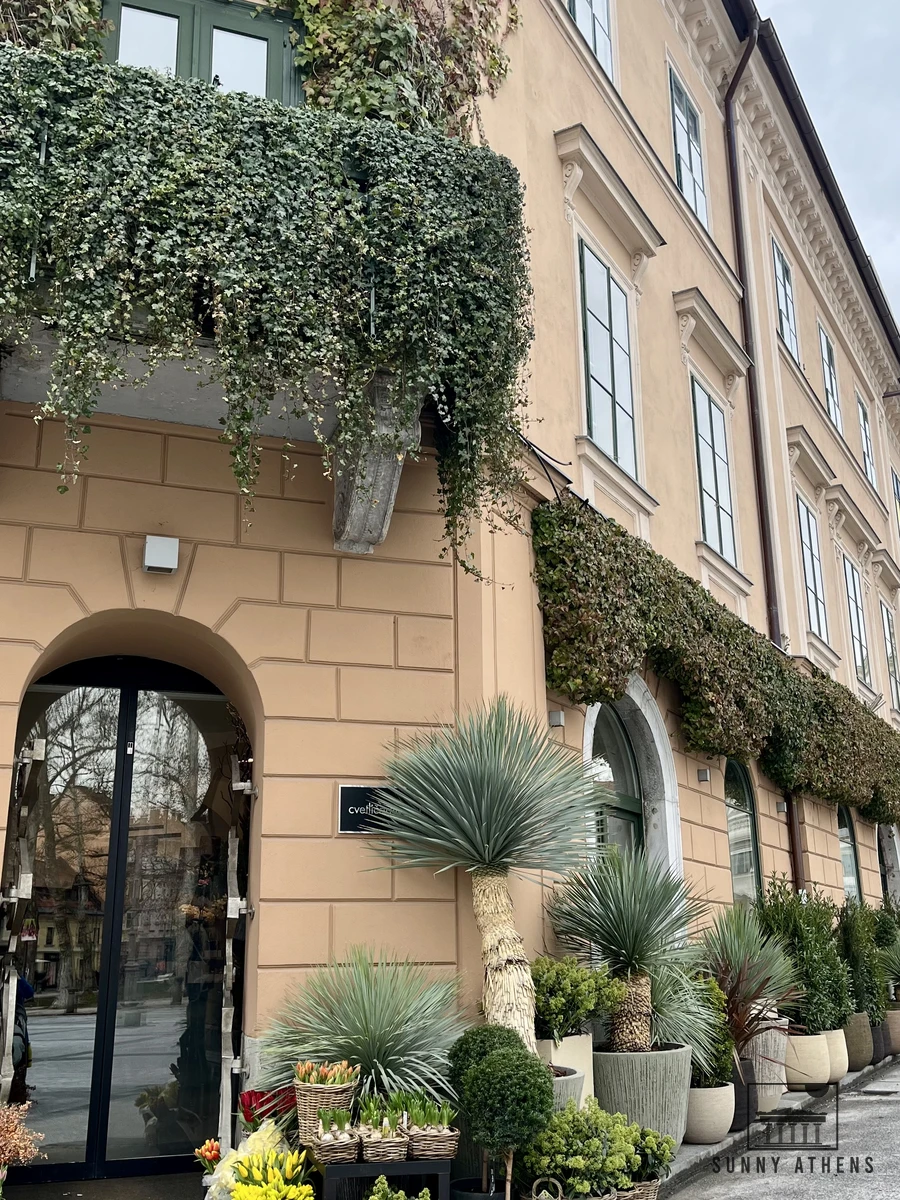
For the city itself, you only need one day in Ljubljana.
The historic center is compact and flat, with all the major landmarks being within a 15-minute walk of each other.
However, I recommend setting aside three days in total so you can combine your one day in Ljubljana with the two classic excursions outside the capital.
Adding a day for Lake Bled and Lake Bohinj and another day for Postojna Cave and Predjama Castle gives you a great first taste of Slovenia, a small but beautiful country.
Whether you rent a car like we did, or join organized excursions, staying in the capital every night keeps your trip simple without changing hotels.
Where to Stay?
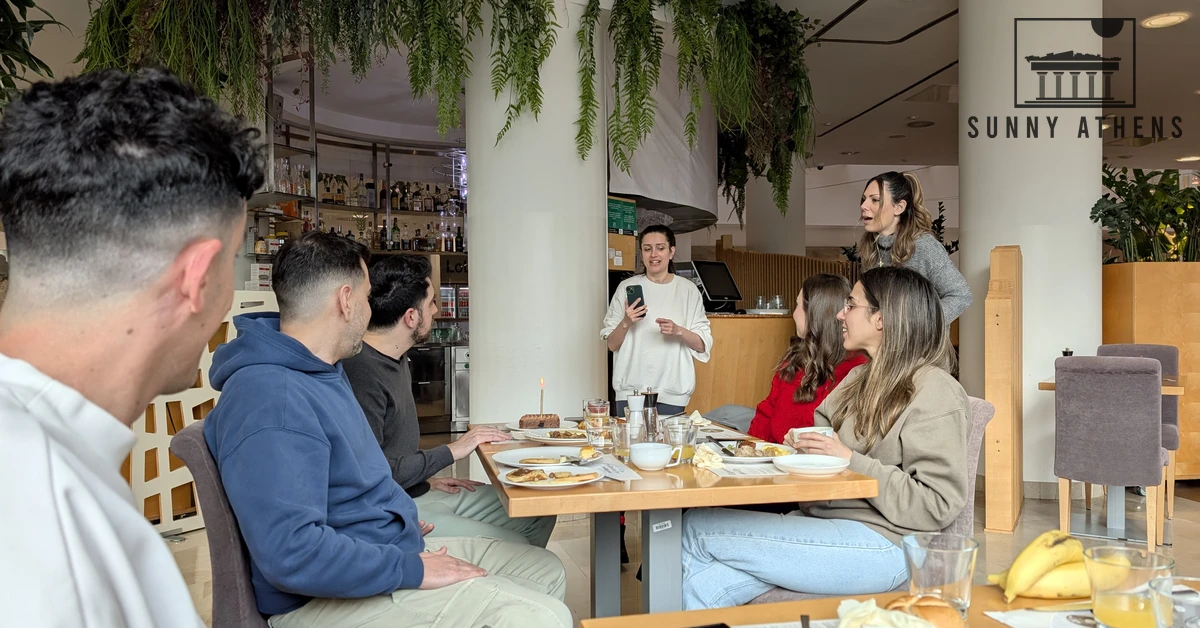
During our trip, Chrysavgi and I stayed at City Hotel Ljubljana.
It is in a very central spot on Dalmatinova Street, just a three-minute walk from Preseren Square and the river.
Our room was large and comfortable, and the morning breakfast buffet had plenty of good options.
Moreover, the hotel has its own underground parking garage where we parked our rental car.
If you are looking for alternatives for your stay in Ljubljana, here are my recommendations:
For those traveling on a budget, AdHoc Hostel sits right on the riverside promenade in the old town, offering both dorm beds and private rooms.
If you love luxury, InterContinental Ljubljana is a five-star property near Tivoli Park featuring spacious rooms, an 18th-floor spa and indoor pool, and a rooftop restaurant with views toward the castle and the Alps.
Alternatively, for a five-star boutique experience right in the medieval streets, Zlata Ladjica Boutique Hotel is set inside a restored 16th-century building steps from the river.
How to Get There?
Ljubljana Joze Pucnik Airport (LJU) is Slovenia’s main international airport, located about 26 kilometers north of the city center.
From the terminal, public buses and shared airport shuttles connect to the Ljubljana Central Bus and Train Station in around 30 to 45 minutes.
If you prefer a direct ride straight to your hotel without waiting for buses, you can pre-book a private transfer with Welcome Pickups. An English-speaking driver meets you in the arrivals hall at a fixed price, even if your flight is delayed.
Alternatively, because there were no direct flights from Athens when we visited in mid-February, we flew into Zagreb, rented a car at the airport, and drove to Ljubljana.
The drive takes less than 1.5 hours, and it’s also a very practical solution if you cannot find affordable flights directly into Slovenia.
If you also want to rent a car, either to drive over from Zagreb like we did or to do the day trips around Slovenia at your own pace, I recommend checking Discovercars to compare prices across rental agencies.
Just remember that driving on Slovenian highways requires an electronic vignette. We bought ours easily at a petrol station a few minutes before crossing the border.
One Day in Ljubljana Walking Itinerary
The recommended route for your day in Ljubljana
1. Le Petit Cafe
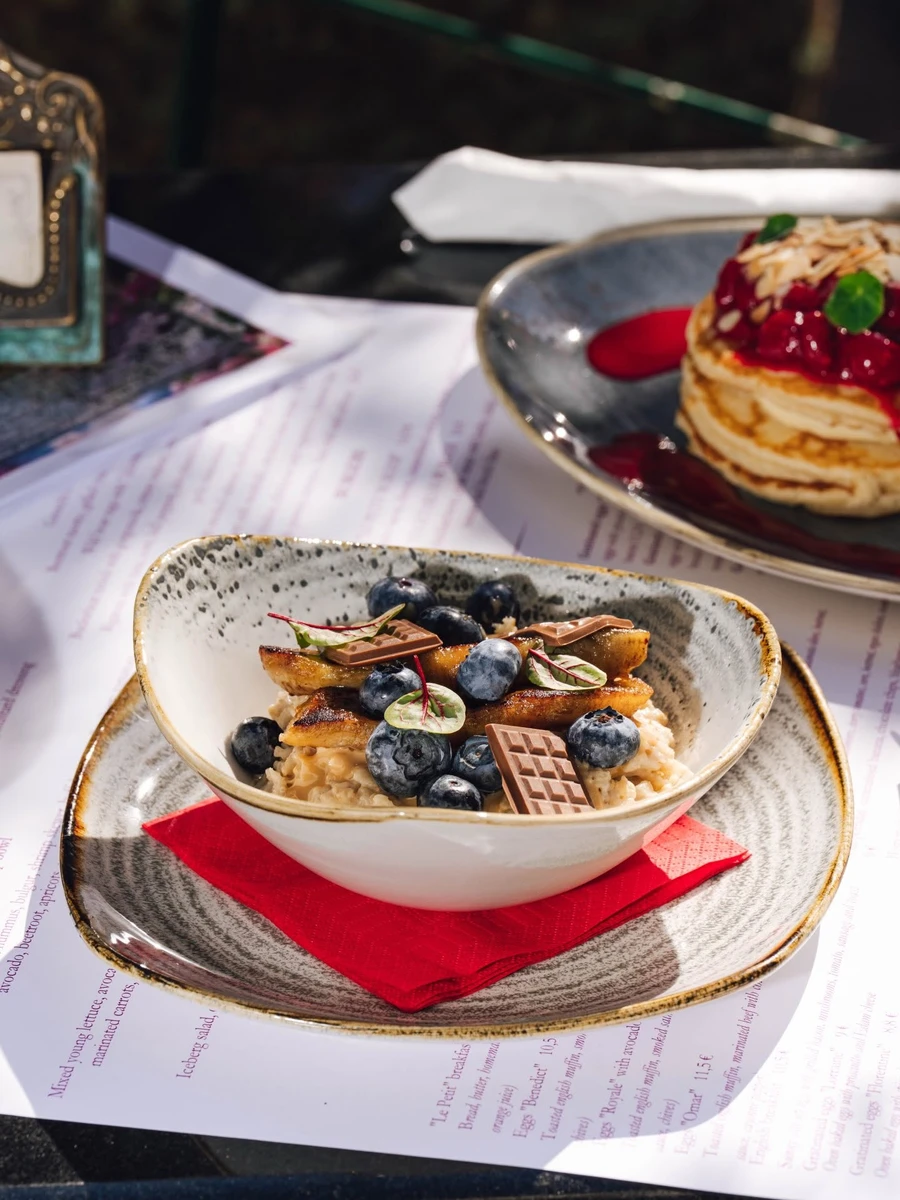
Why: Although Chrysavgi and I had breakfast included at City Hotel Ljubljana, Le Petit Cafe is a great option if your hotel does not include breakfast. It has a relaxed atmosphere and serves classic morning dishes like eggs Benedict, omelets, croissants, and good coffee. It is an easy, comfortable spot to start your day before exploring the city.
2. Ljubljana Free Walking Tour
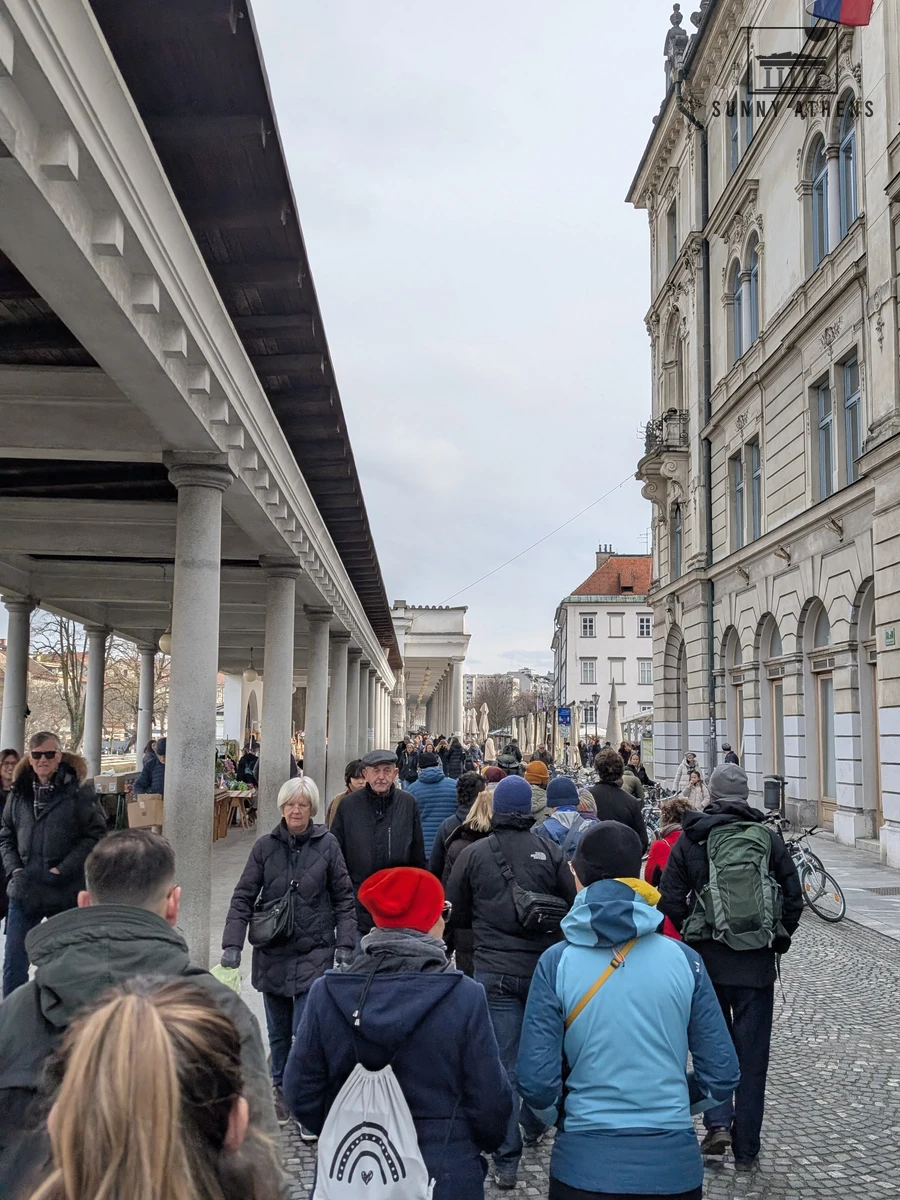
Why: Joining a walking tour is a great way to get a first introduction to the city with a local, so we booked this Ljubljana Free Walking Tour. If you have not joined a free tour before, booking your spot online is completely free, and at the end you simply tip the guide whatever you feel the walk was worth. If you prefer to explore on your own without a group, you can simply follow the itinerary below step by step. Otherwise, once the two-hour walk finishes, you can continue with the sights below that were not covered or that you want to spend more time exploring.
3. Vurnik House
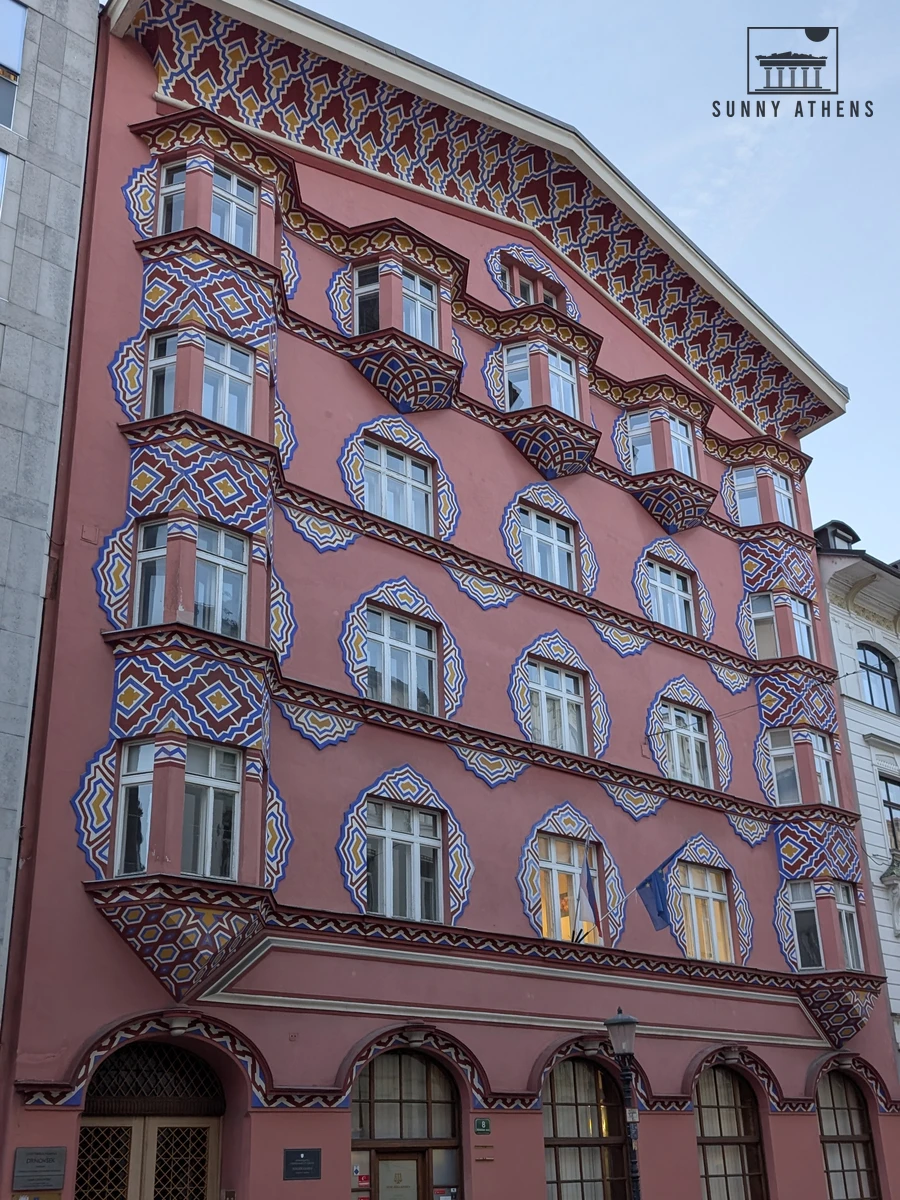
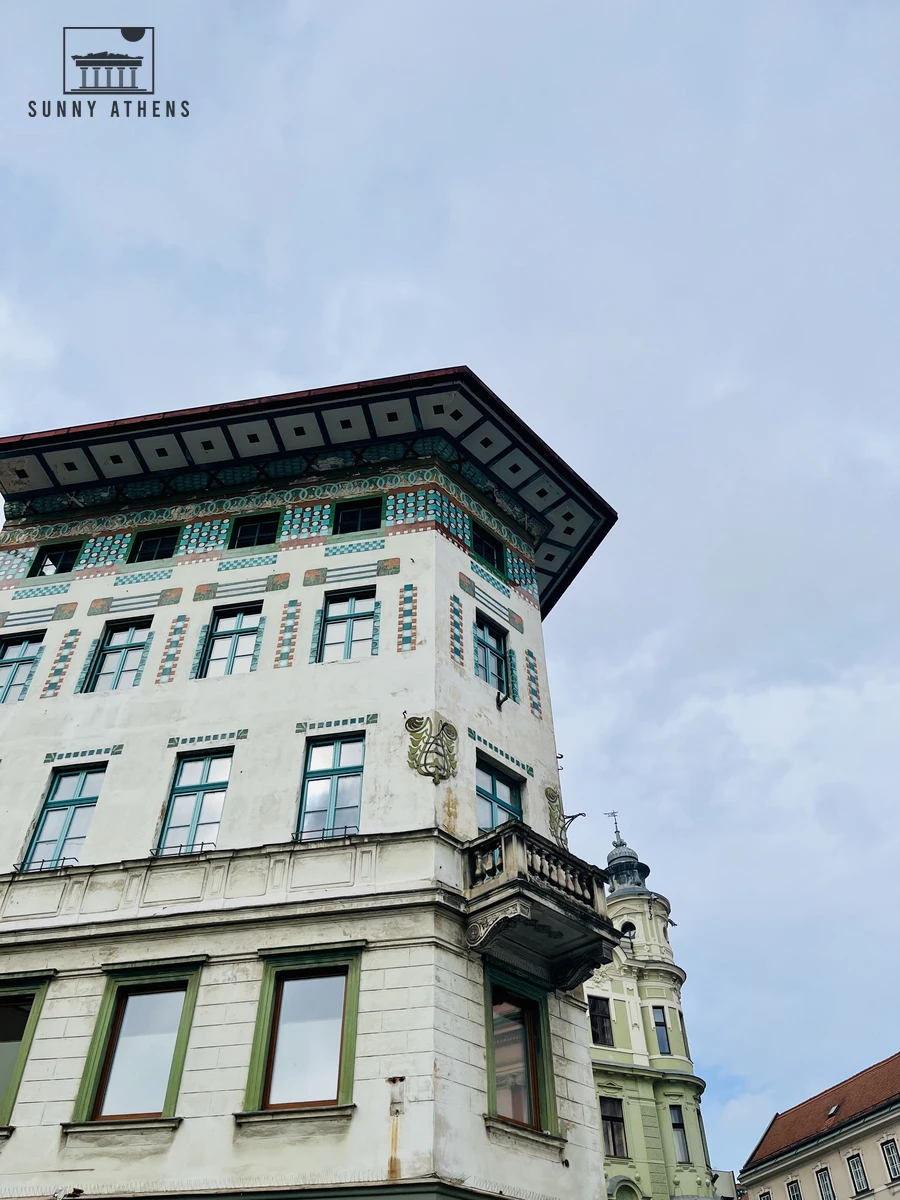
Why: Just a few steps from Preseren Square, Vurnik House is one of the most eye-catching buildings in Ljubljana. Built in 1921 for a local bank, it was designed by architect Ivan Vurnik and his wife Helena in the colors of the Slovenian flag: red, white, and blue. Although the building houses offices today and is not open inside, its facade is well worth a quick stop for photos.
4. Preseren Square
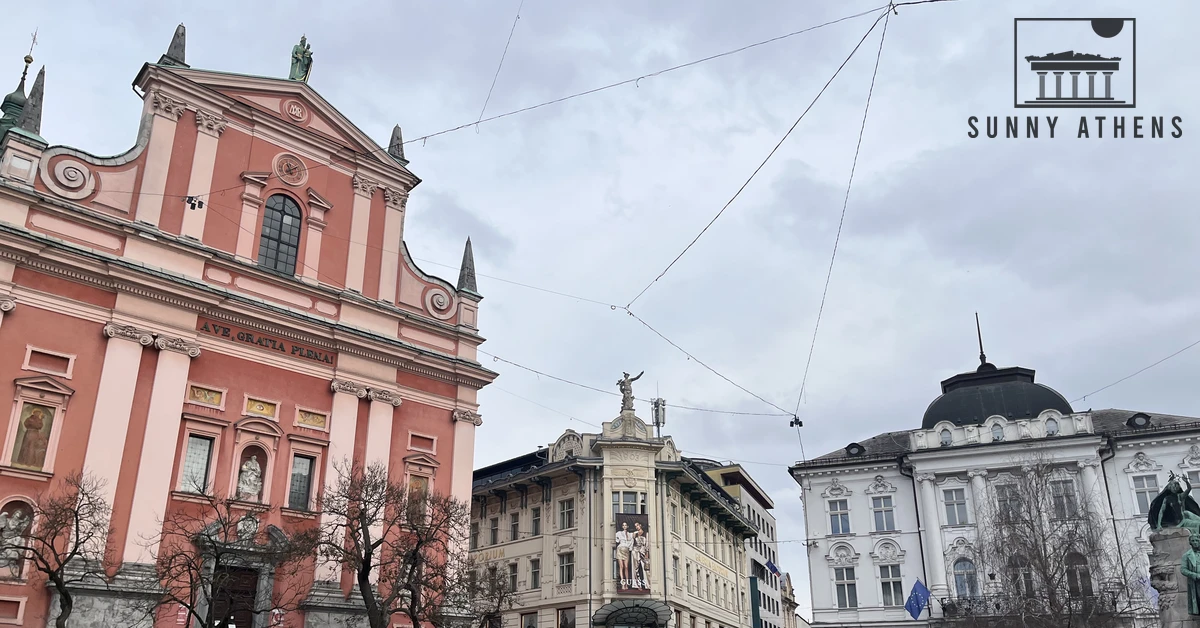
Why: Any walk around Ljubljana starts at Preseren Square, the main meeting point in the heart of the city. Here you will see the bronze statue of Slovenia’s national poet, France Preseren, and the bright pink 17th-century Franciscan Church. Since the Triple Bridge sits right at the edge of the square, this is where the modern part of town meets the old historic streets across the river.
5. Triple Bridge
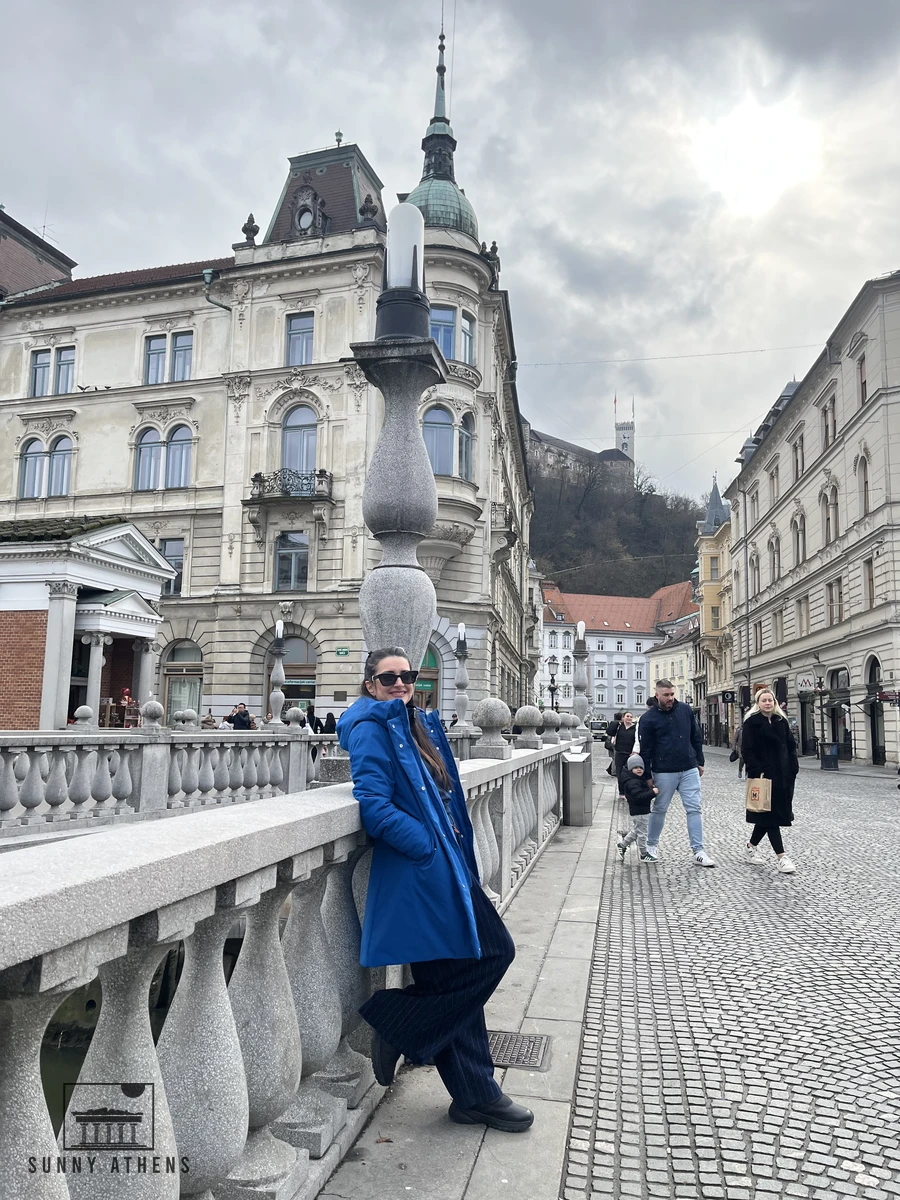
Why: Right in front of Preseren Square, the Triple Bridge is the signature work of Slovenia’s famous architect Joze Plecnik. Between 1929 and 1932, Plecnik added two pedestrian side bridges next to the older 1842 stone bridge, creating its unique three-way layout. Today, listed as a UNESCO World Heritage Site, it connects the main square directly with the old town streets below the castle.
6. Dragon Bridge
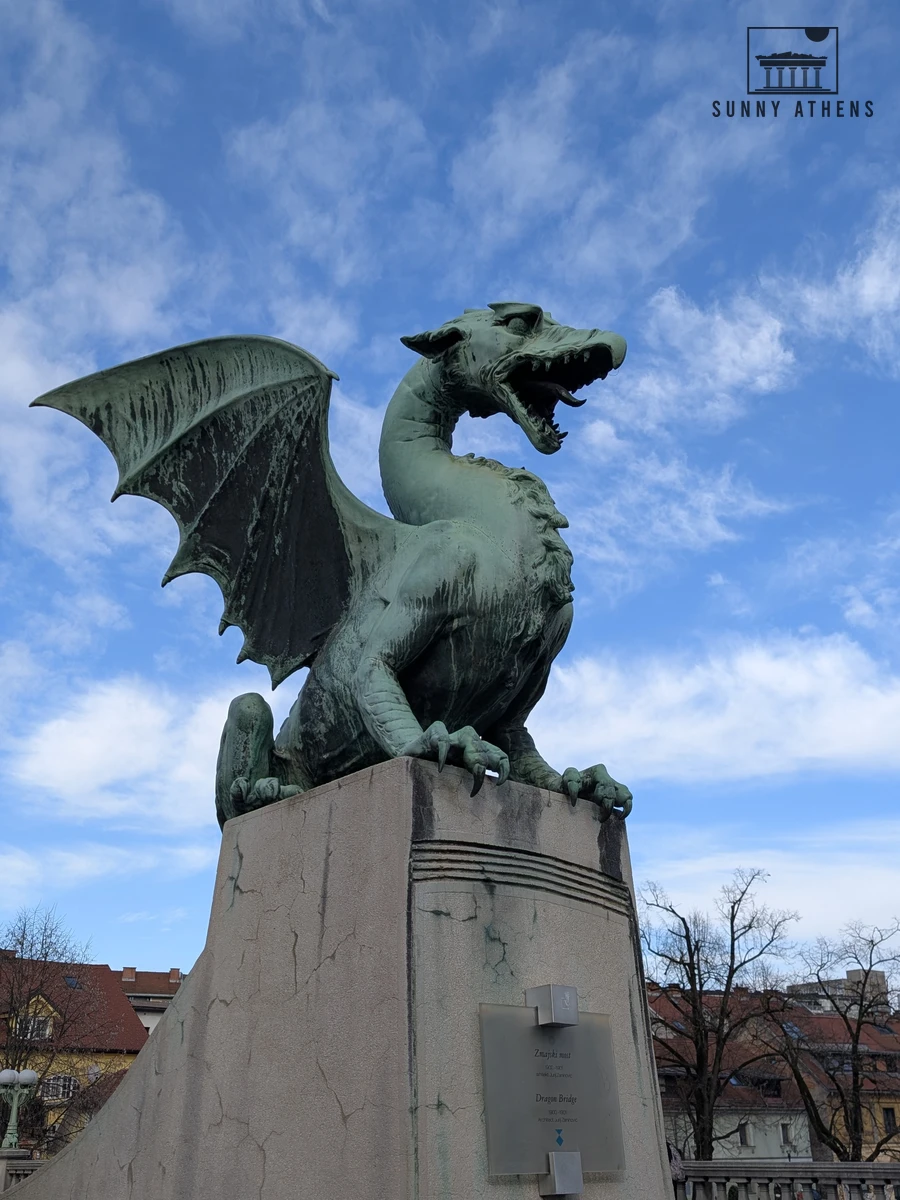
Why: The dragon is the mascot of Ljubljana, and you will see it everywhere from the city coat of arms to local souvenirs. Crossing this famous 1901 bridge is the best way to see the city’s symbol, with four large dragon statues standing on its corners. It is also one of the most popular photo spots in town, offering great views along the river.
7. The Butchers’ Bridge
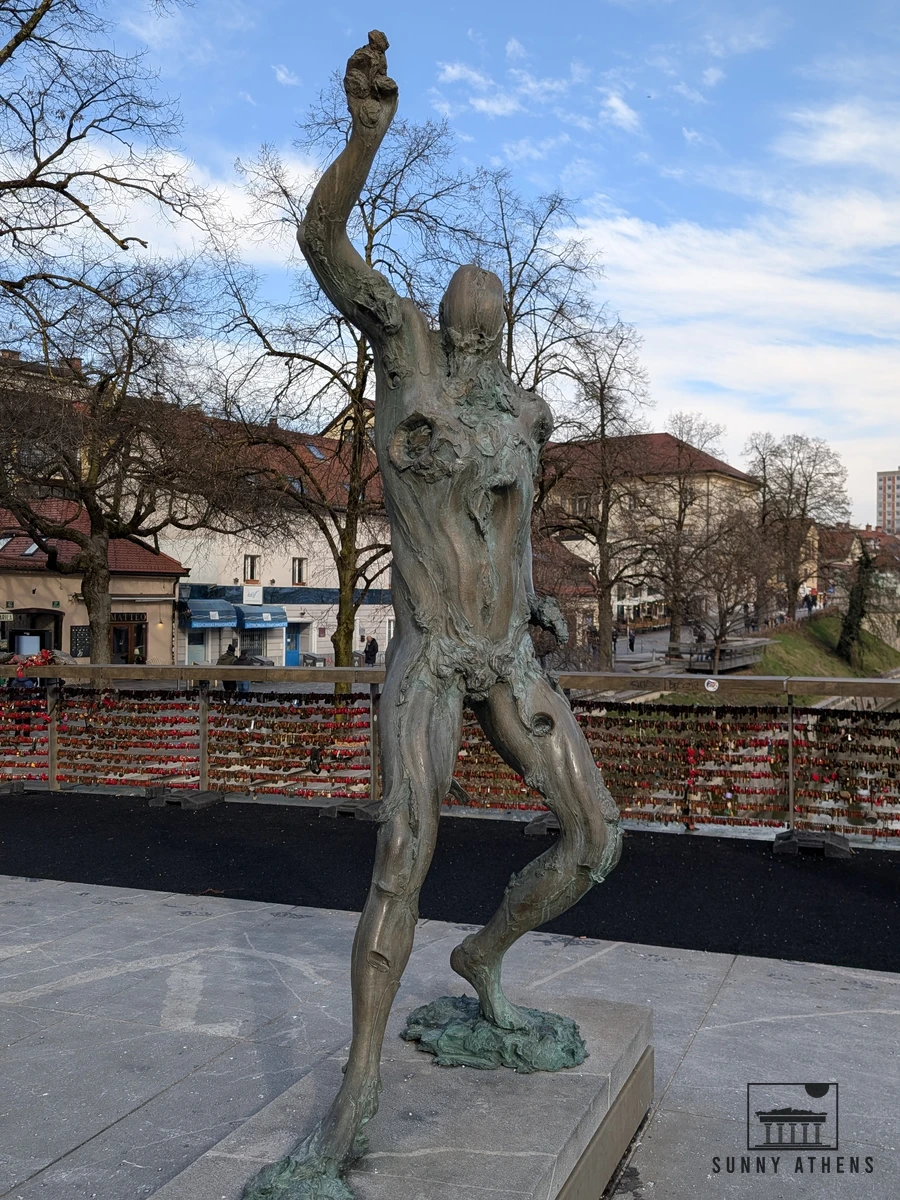
Why: Walking back along the river brings you to the Butchers’ Bridge, a modern footbridge opened in 2010. Its name comes from the butcher shops that used to stand in the market right next to it, though today its wires are covered in thousands of love padlocks left by couples. As you cross, you will also notice strange bronze sculptures along the bridge and glass floor panels on the sides that let you look straight down at the river.
8. Ljubljana Central Market
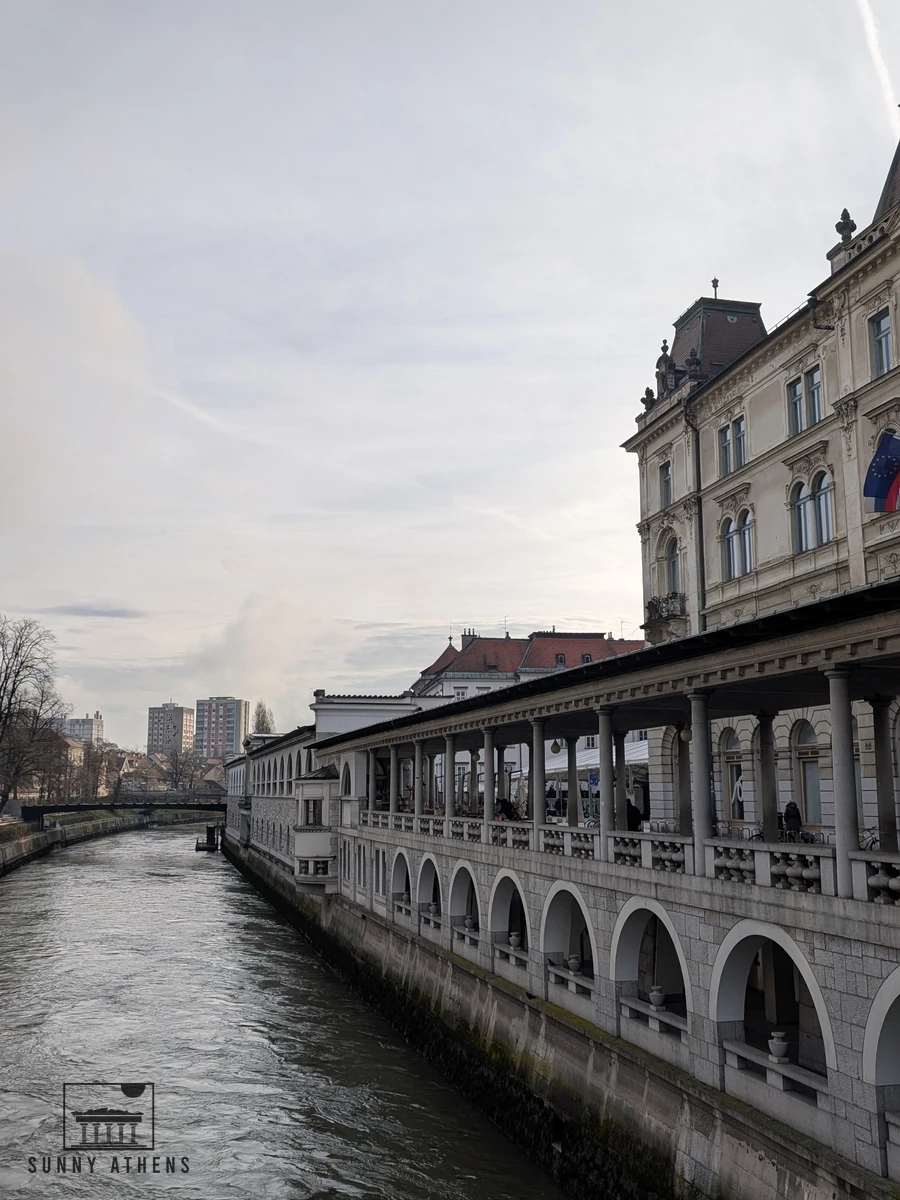
Why: Right next to the bridge, you will find the Ljubljana Central Market, another landmark designed by architect Joze Plecnik. It includes both a large outdoor market on the square and a covered colonnade running along the river. Farmers set up stalls here every day selling products like fresh fruit, vegetables, honey, and local cheeses, making it a great place to walk through.
9. Saint Nicholas’ Cathedral
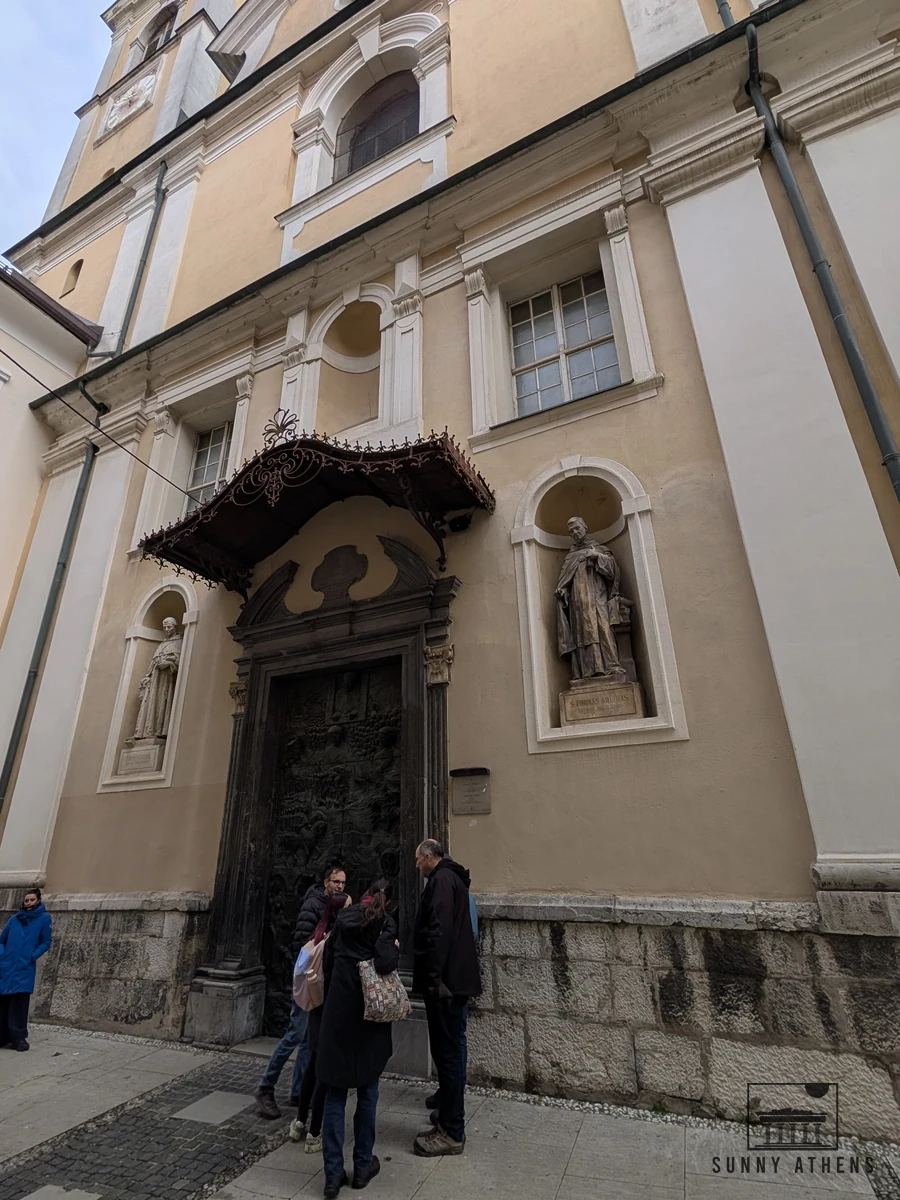
Why: Right behind the market stands Saint Nicholas’ Cathedral, the main church of Ljubljana. Built in the early 18th century, it is dedicated to the patron saint of fishermen and boatmen. Even if you only see it from the outside, make sure to check out the two bronze doors made in 1996 for Pope John Paul II’s visit, which show carved scenes from Slovenia’s history.
10. Ljubljana Castle Funicular
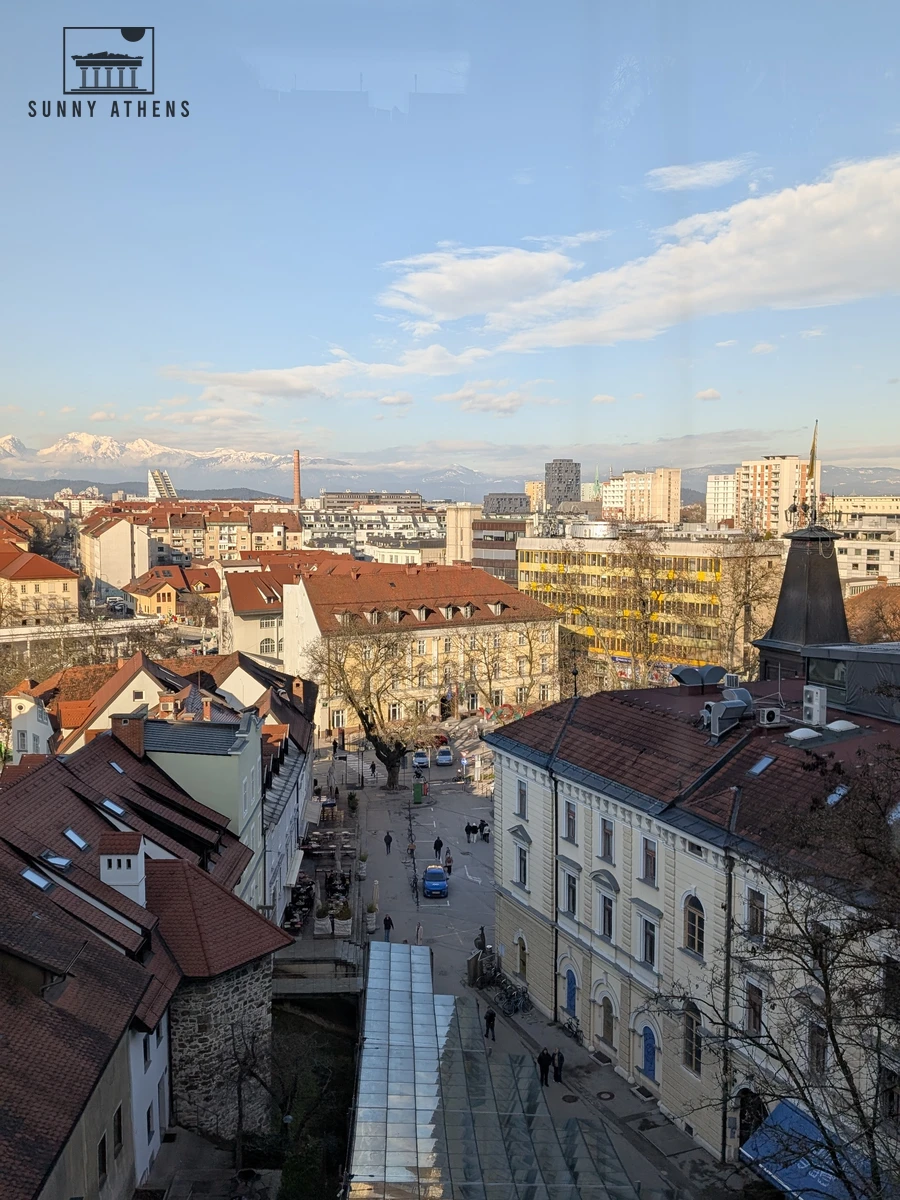
Why: A two-minute walk from the cathedral brings you to Krekov Square and the lower station of the Ljubljana Castle Funicular. This glass cable car takes you up to the castle in just 60 seconds, offering nice views over the red roofs of the old town on the way up. It is by far the easiest way to reach the top of the hill without having to walk up the steep path.
11. Ljubljana Castle
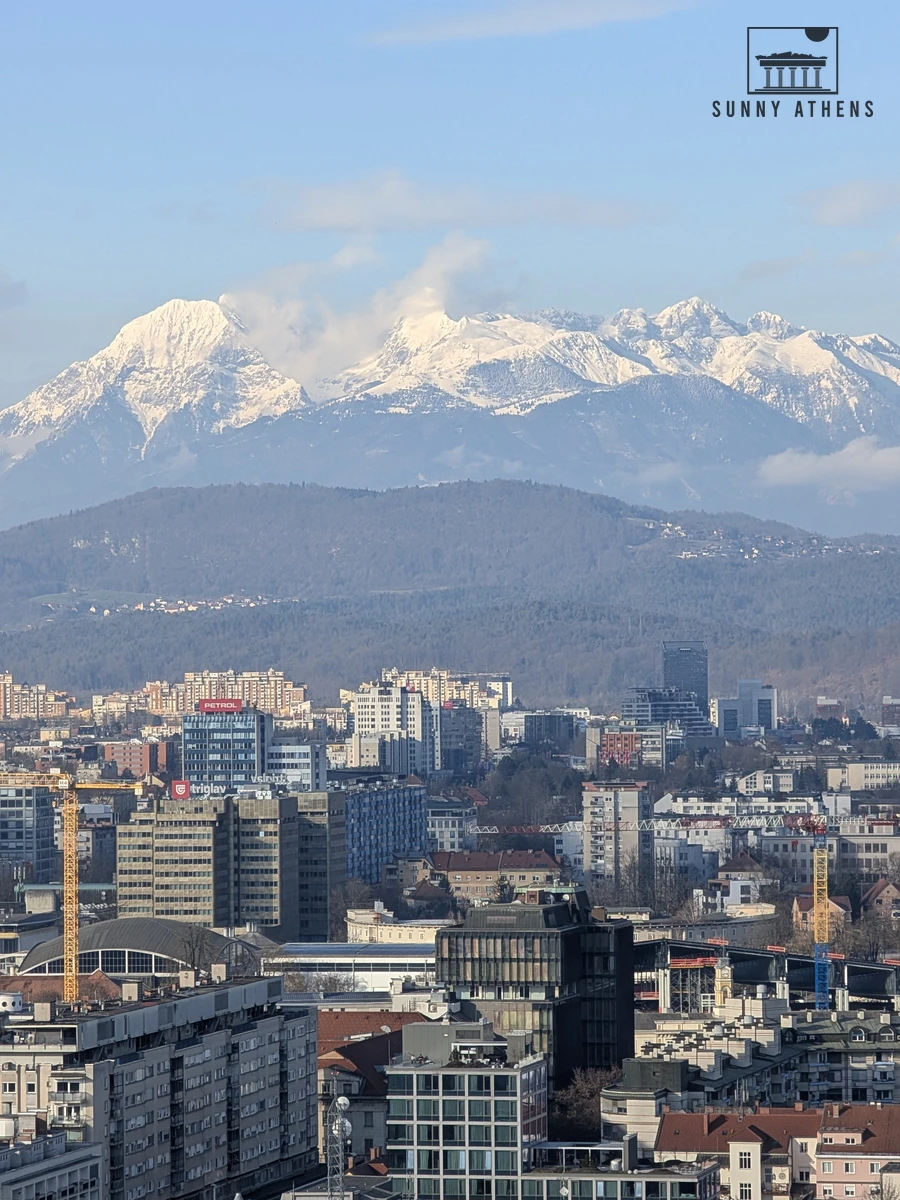
Why: Standing on the hill right above the old town, Ljubljana Castle is a medieval fortress that has been used over the centuries as an army base, a royal residence, and a prison. Chrysavgi and I took the funicular up and explored the inside of the castle, including the Puppet Museum and the viewing tower. Climbing to the top of the tower is well worth it, as it gives you the best views over Ljubljana and all the way to the Alps on a clear day.
12. Slovenska Hisa Ljubljancanka
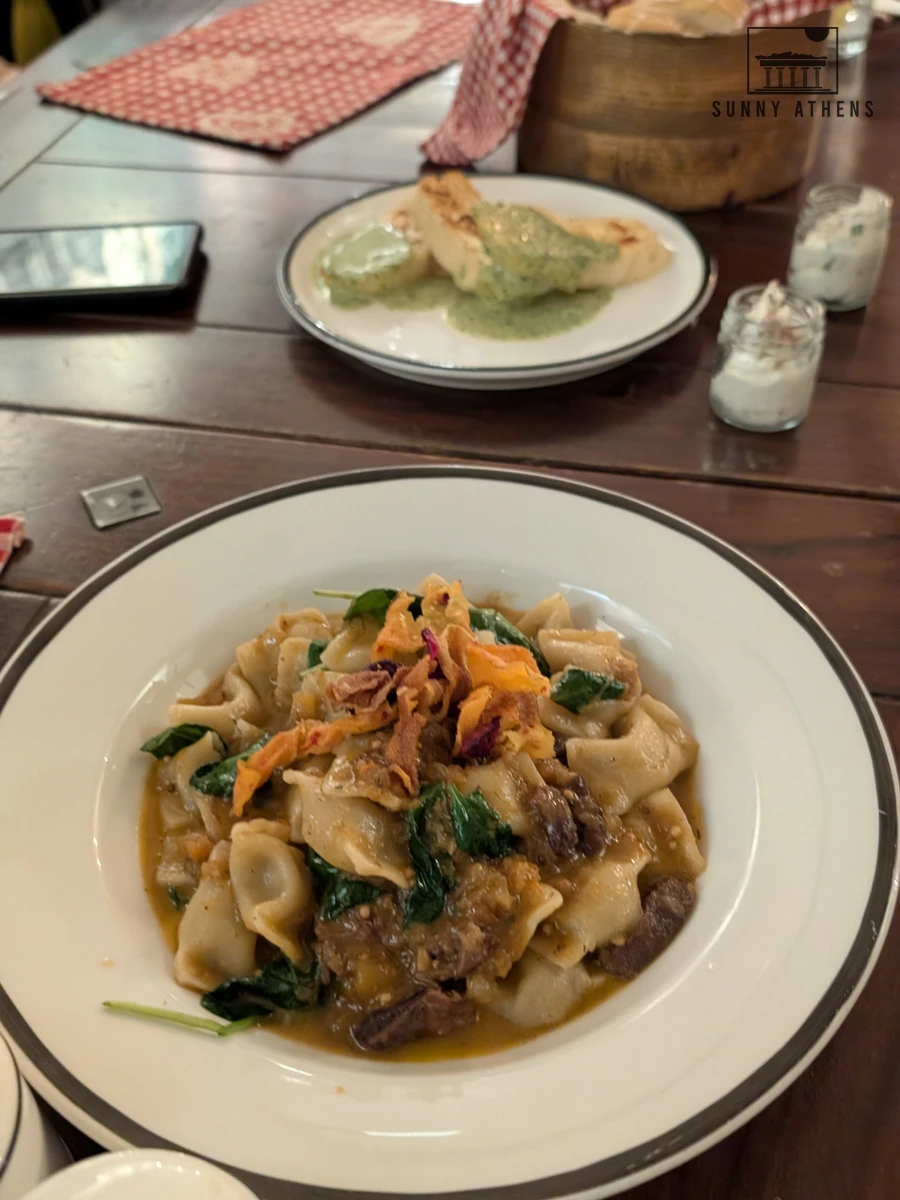
Why: After taking the funicular back down from the castle, you will probably be ready for lunch. Slovenska Hisa Ljubljancanka is a great spot in a quiet courtyard, serving traditional Slovenian dishes made with local ingredients. We ordered the savory herb struklji and the Idrijski zlikrofi dumplings with meat sauce, and both dishes were delicious and filling.
13. Cacao Ljubljana
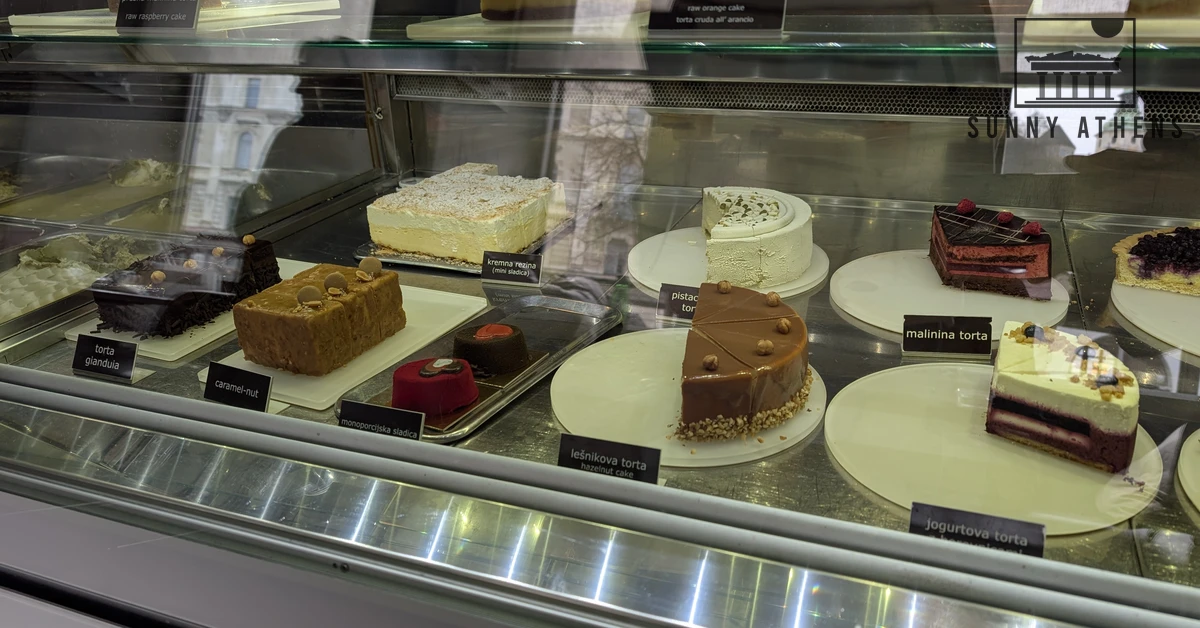
Why: Time for coffee and dessert at Cacao, one of the most popular cafes in Ljubljana. We shared a warm apple strudel along with a kremna rezina, the famous Slovenian vanilla and cream cake from Lake Bled. With tables right on the riverside walkway and a huge selection of cakes and ice cream, it is a great place for an afternoon break.
14. Metelkova
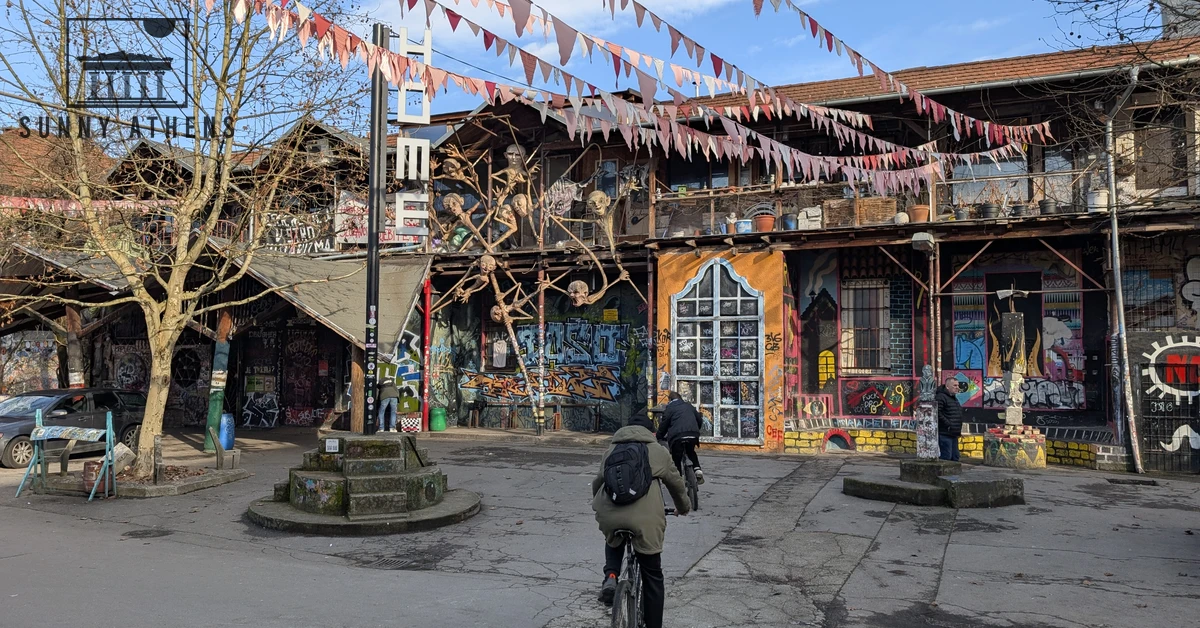
Why: After your coffee and dessert, a 15-minute walk brings you to Metelkova. Built on the site of a former army base, it has been transformed into Ljubljana’s main alternative art neighborhood. Visiting during the day when it is quiet is the best time to walk around and take photos, while at night the area gets busy with bars and clubs.
15. Town Square
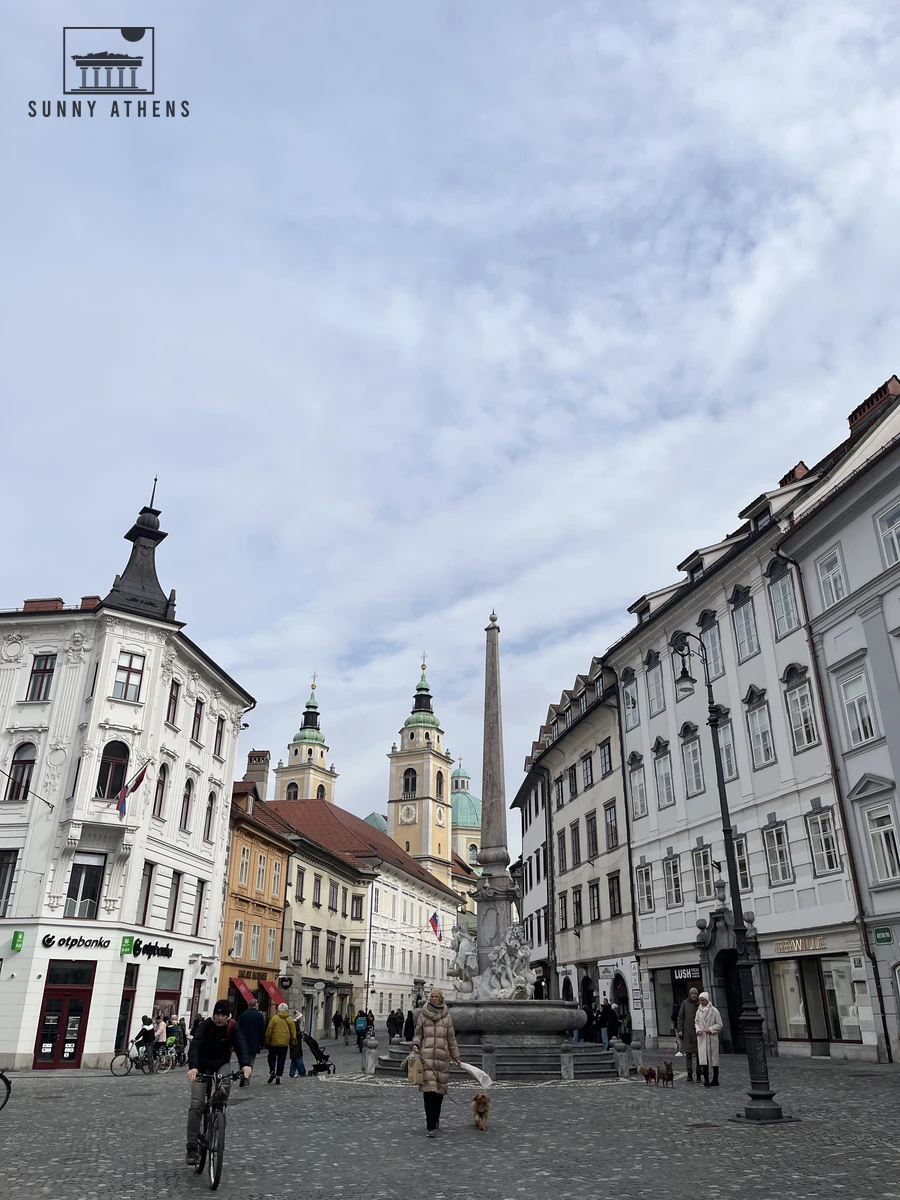
Why: Walking back across the river into the old town brings you to Town Square, a wide pedestrian street lined with 17th- and 18th-century buildings, small cafes, and galleries. Right in the middle stands the 15th-century Town Hall, known for its clock tower and an inner courtyard that you can enter for free. Just outside is the 1751 Robba Fountain, whose three marble statues hold water jugs representing the three main rivers of the region. Note that the fountain on the square today is a copy, while the original sculptures are kept safe inside the National Gallery.
Map Town Square, Town Hall, and Robba Fountain
16. Old Square
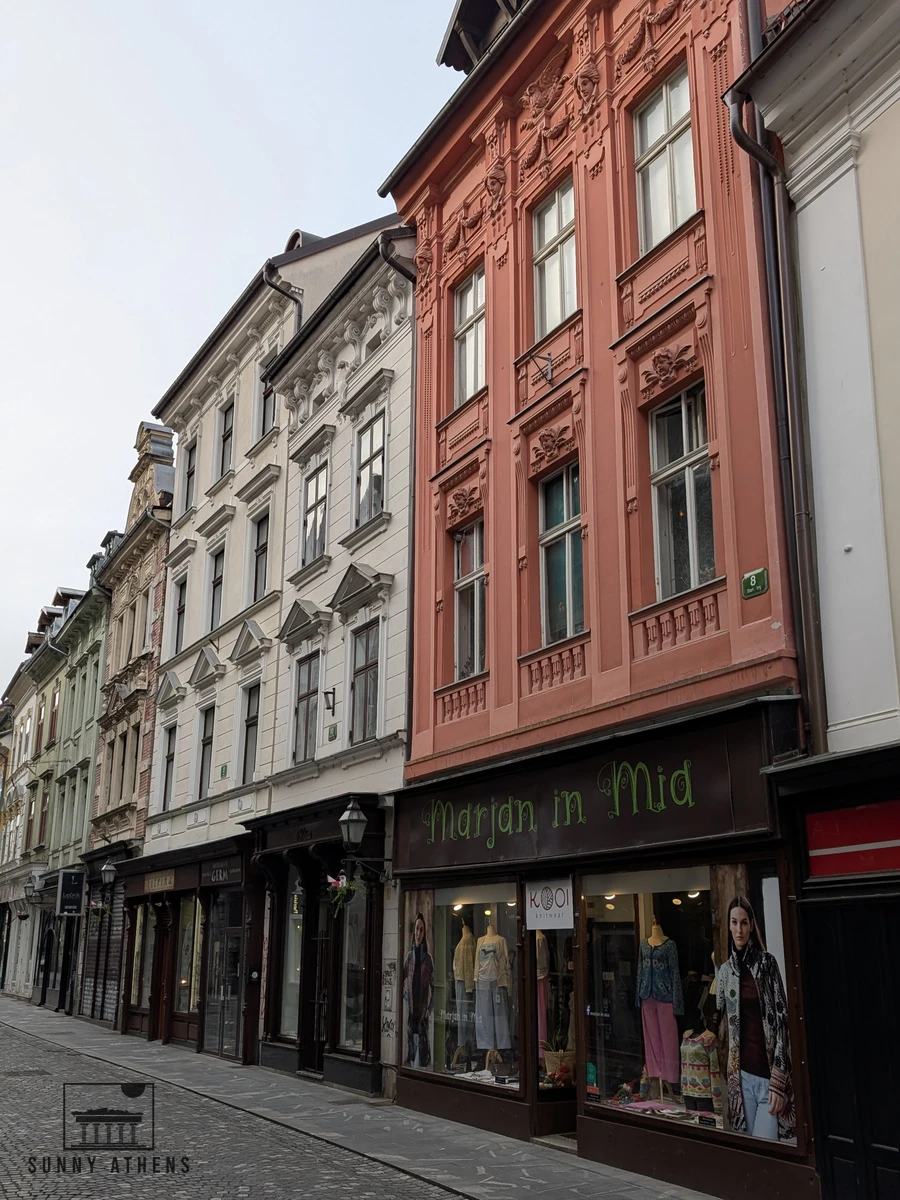
Why: Continuing south from Town Square, the street turns into Old Square, the oldest neighborhood in the city center. Despite its name, it is actually a narrow pedestrian street lined with old wooden shopfronts, cafes, and small local shops. It is much quieter here than around the main bridges, making it a nice street to stroll through at a relaxed pace.
17. Krizanke & Ljubljana City Museum
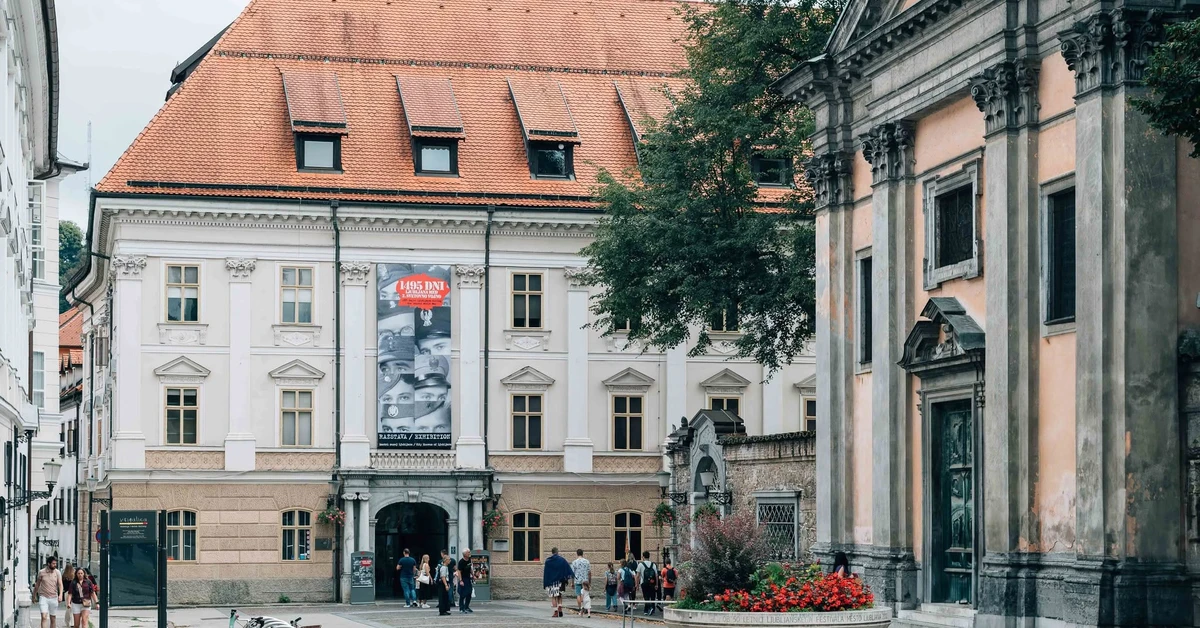
Why: At the end of the street, you will pass two historic landmarks standing right next to each other. The Ljubljana City Museum is housed inside a 17th-century palace, where a glass floor at the entrance lets you see ancient Roman ruins right beneath the street (inside, it holds the world’s oldest wooden wheel, around 5.200 years old). Right beside it is Krizanke, a former 13th-century monastery redesigned by architect Joze Plecnik that now hosts open-air summer concerts and has a nice front courtyard with detailed wall patterns.
Map Krizanke and Ljubljana City Museum
18. Congress Square
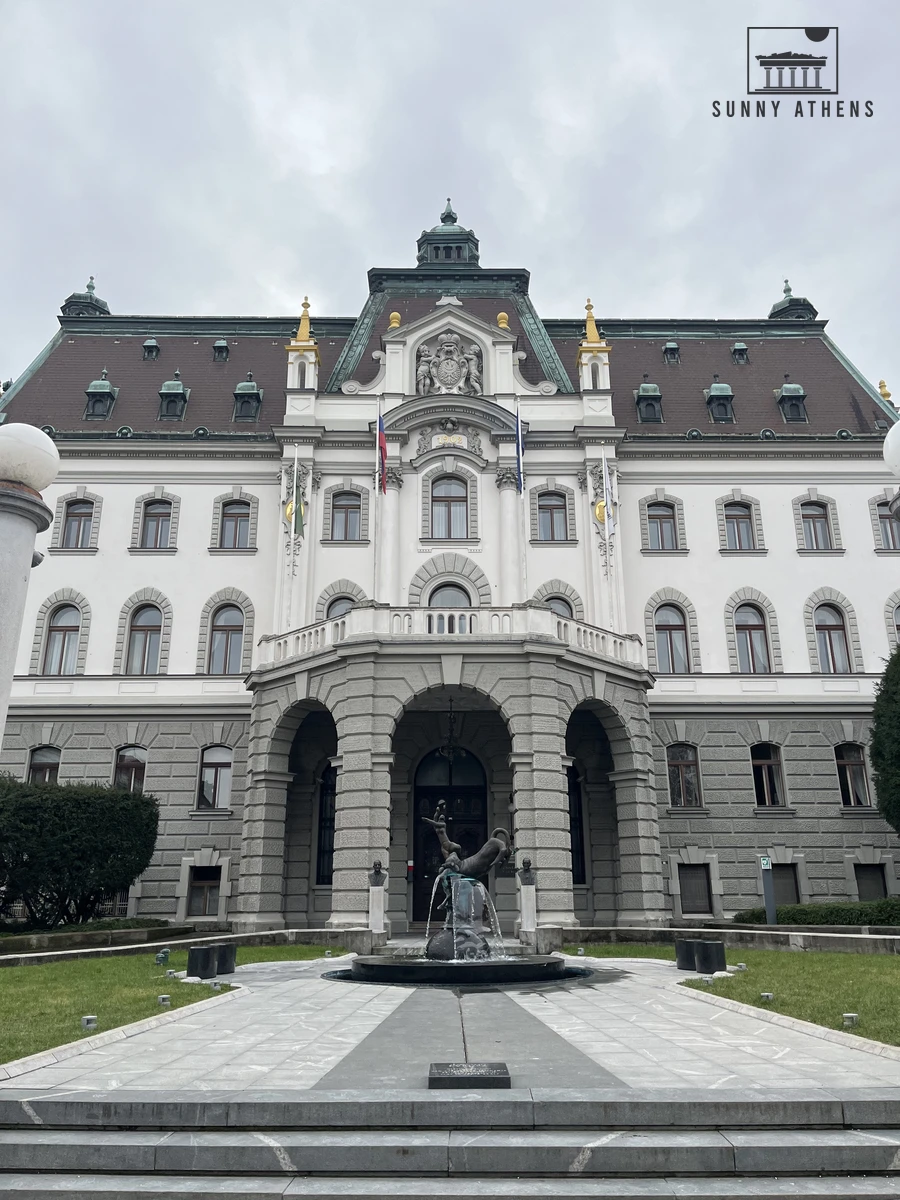
Why: Congress Square is one of the largest squares in the center of Ljubljana. It is surrounded by some of the city’s most important buildings, including the University of Ljubljana and the Slovenian Philharmonic. Zvezda Park sits right in the middle of the square, with tall trees, benches, and a great open view looking straight up to Ljubljana Castle.
19. National Gallery
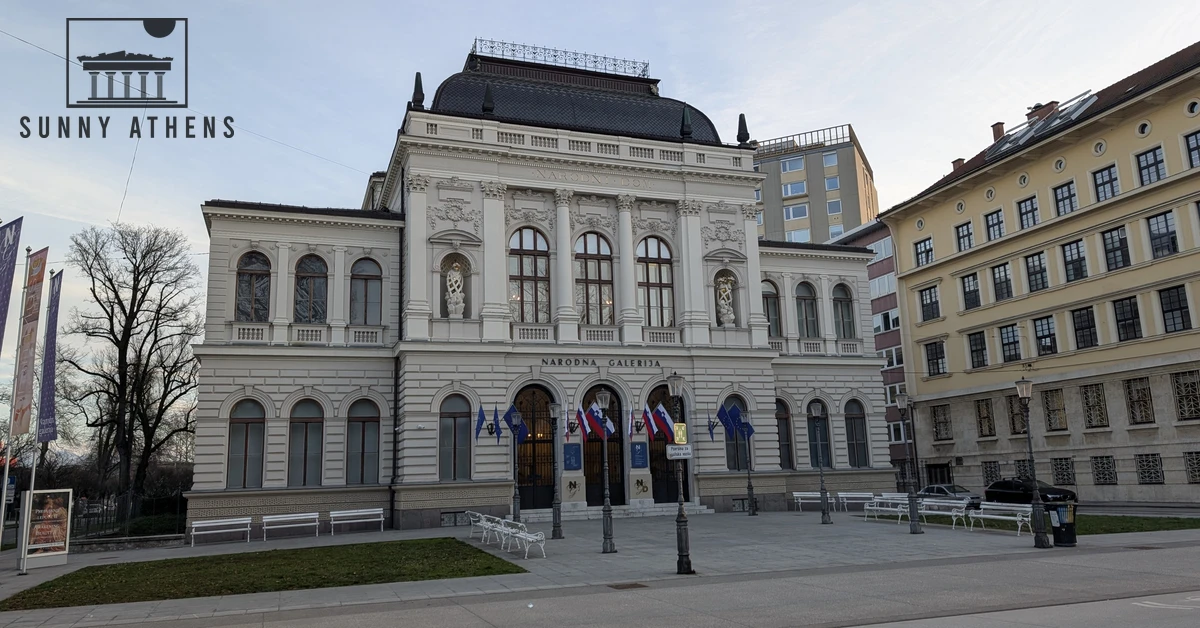
Why: A five-minute walk brings you to the National Gallery. Housed in a grand 1896 building near the edge of the center, it’s Slovenia’s main art museum, featuring paintings and sculptures from the Middle Ages to the 20th century. The glass entrance hall is where the original 1751 Robba Fountain from Town Square is kept on display.
20. Tivoli Park
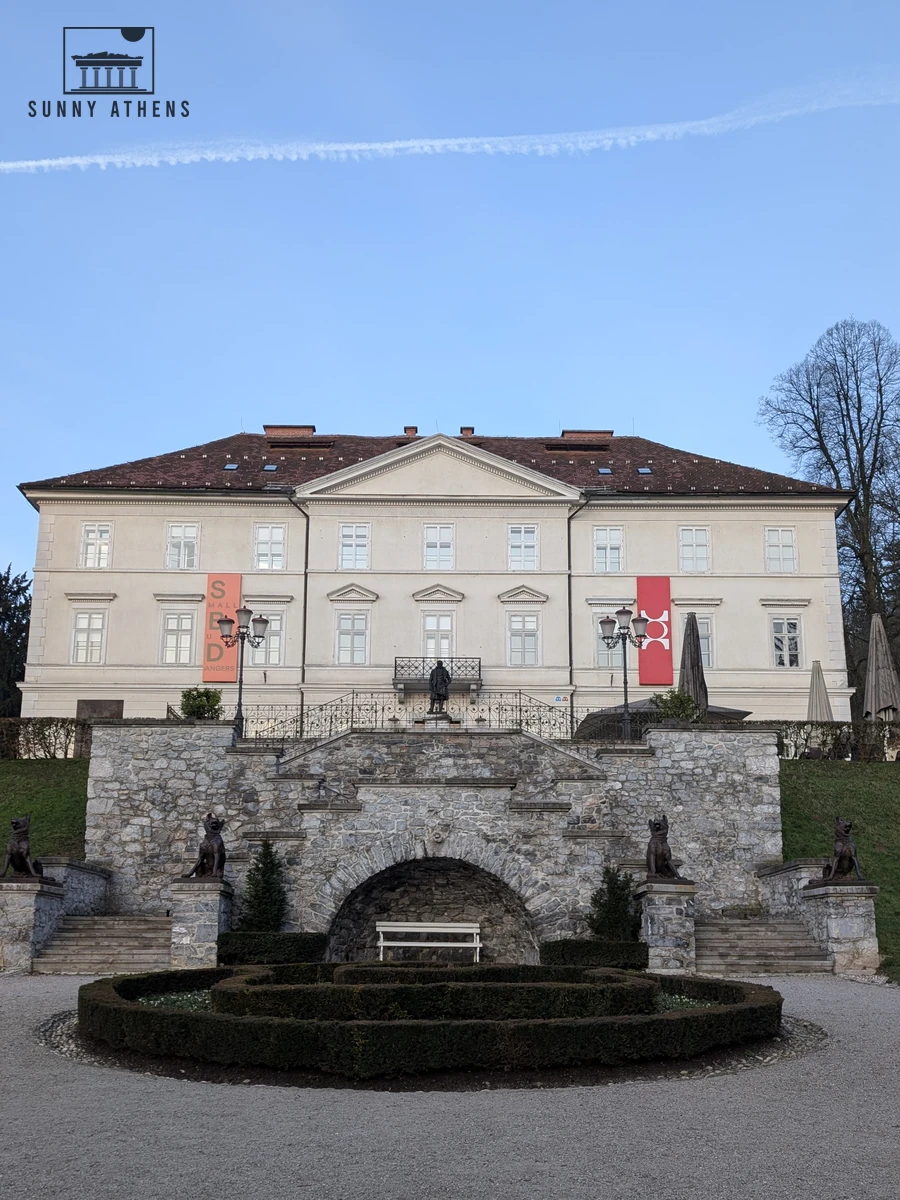
Why: Right behind the National Gallery begins Tivoli Park, the largest park in Ljubljana. Opened in 1813, it is where locals come to walk, jog, or sit on the benches along its wide tree-lined paths and gardens. As you walk down the main promenade toward Tivoli Castle, you will also pass large outdoor photo exhibitions that are displayed in the park all year round.
21. Burek Olimpija
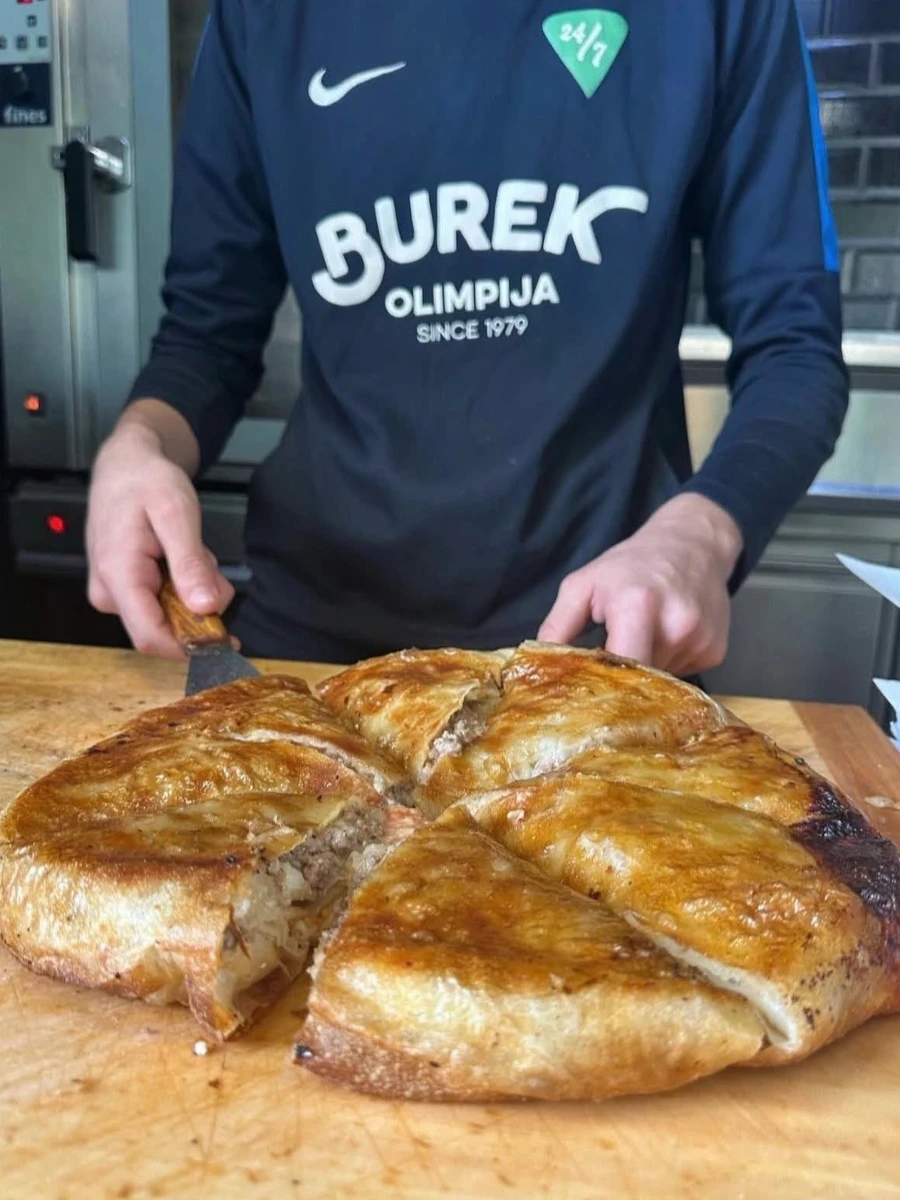
Why: A casual way to wrap up your day in Ljubljana is stopping by Burek Olimpija. It is best known for its burek, a traditional baked pastry stuffed with cheese, minced meat, apple, or even pizza toppings. Chrysavgi and I ordered one with cheese and one with meat for dinner, and while they were a bit heavy for the evening, both were really tasty.
Practical Tips & FAQs
Is one day in Ljubljana worth it?
Yes, spending one day in Ljubljana is well worth it because the city center is compact, relaxed, and very easy to explore on foot.
You can see the main bridges and squares, ride the funicular up to the castle, and try traditional Slovenian food in a single day without feeling rushed.
What is the best time of year to visit Ljubljana?
The best months to visit Ljubljana are from May to September, when the weather is warm and the riverside cafes set up their outdoor tables.
December is also a popular time to visit for the Christmas markets along the river.
Chrysavgi and I visited in mid-February, and while it was cold, the old town was quiet and easy to walk around without crowds.
Do I need a vignette to drive to Ljubljana?
Yes, all highways in Slovenia require an electronic vignette linked to your car’s license plate.
When we drove over from Zagreb, we stopped at a petrol station just before the border and bought a weekly vignette in a few minutes.
What currency is used in Slovenia?
Slovenia uses the Euro, and cards are accepted almost everywhere, from cafes and restaurants to the castle funicular.
Still, it is useful to carry a little cash for tipping your guide on the Ljubljana Free Walking Tour or buying small snacks at the Central Market.
Final Thoughts
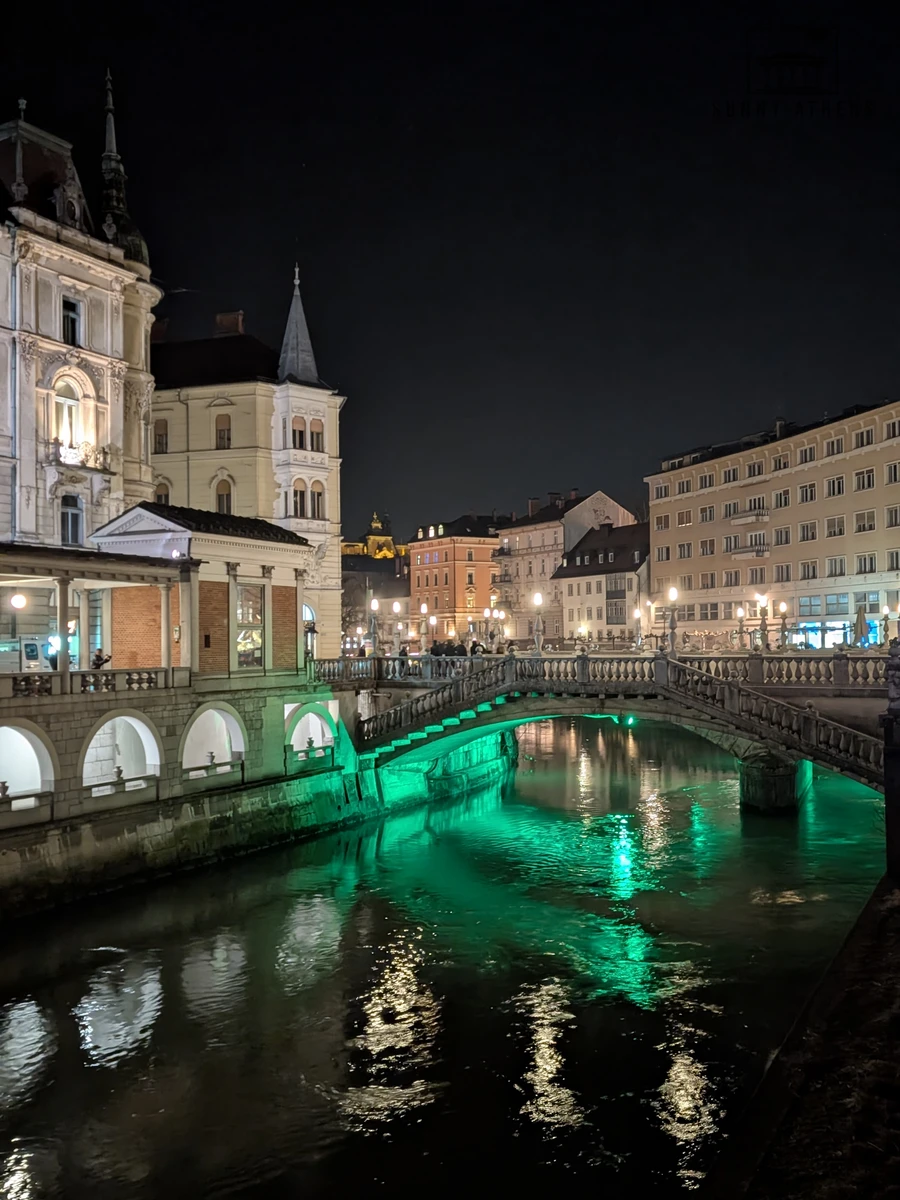
The walk above is more than enough to enjoy a full day in Ljubljana and get a great first taste of Slovenia’s capital.
However, if you love tight schedules and want to add one more stop to your day, you can also visit the Slovene Ethnographic Museum.
It sits right next to Metelkova and explores traditional Slovenian life and local crafts.
Finally, if you have more days to spend in Slovenia, keep an eye out for my upcoming guides covering our two day trips from Ljubljana: Lake Bled and Lake Bohinj, as well as Postojna Cave and Predjama Castle.
In the meantime, if you are combining Slovenia with Croatia like we did, you can check out my guides for one day in Zagreb, one day in Plitvice Lakes, one day in Split, and one day in Dubrovnik.
For more European city breaks, you can also read my itineraries for 3 days in Vienna, Wroclaw in one day, and my home city, Athens in 1 day.
Plan Your Trip
Stay: Stay: Booking.com (24/7 support, easy booking)
Airport: Welcome Pickups (pre-booked, reliable airport transfers)
Drive: Discovercars (compare prices, free cancellation)
Connect: Airalo eSIM (cheap data)
Do: GetYourGuide (unique tours & activities)
Fly: Skyscanner (find the cheapest flights)
Explore: GuruWalk (free walking tours worldwide)
Protect: SafetyWing (affordable travel insurance)
Sunny Athens is reader-supported. Some links on this page may be affiliate links, meaning we may earn a small commission at no extra cost to you, if you make a purchase. This helps support our work and keeps our travel tips honest and independent. Learn more in Advertise Disclosure.


